Sunday Ride: Now and Then


When we were kids, my brothers and I were periodically subjected to my father’s long Sunday drives after church. If my father was still alive, I think he would recall these drives as the foundation of our interests in architectural style. My memory to date is that I hated them: the three of us kids in the back seat poking at one another; my dad putting on classical music and telling us to be quiet; he pointing out interesting homes for us to look at and appreciate; sitting after having already sat through Catholic mass–it was really a lot to ask from three rowdy kids.

Today, history repeated itself one generation later, but with an improved concoction if you ask me. We skipped church this morning and slept in (or at least I slept in; the boys did a few science projects, played chess and played with legos). I finally joined them for a leisurely breakfast and we stayed inside until the early afternoon.

Only when the sun was beckoning did we get on our bicycles and head out. The three of us cycled through Wassenaar-a  town within twenty minutes cycling distance of The Hague. The estates, mansions, and embassy homes have such grandeur that I accidentally called Wassenaar Montecito a few times. (Montecito is a wealthy estate-laden area just outside of Santa Barbara, California with grand villas and mansions of the rich and famous, all tucked into the rolling hills of California bordering the Pacific.)

Whereas Montecito offers beautiful curvy roads, it is far from bicycle-friendly. Wassenaar on the other hand is full of bicycle paths that parallel the streets and highways and weave in and out of natural spaces and parks.

Bicycling through the neighborhoods is far preferable to sitting in the back seat of a car. Our son replied with enthusiasm as my husband pointed out grand churches, estates from the 1890s now home to ambassadors of Middle Eastern countries and grand mansions with the requisite Mercedes and Jaguars parked out front.
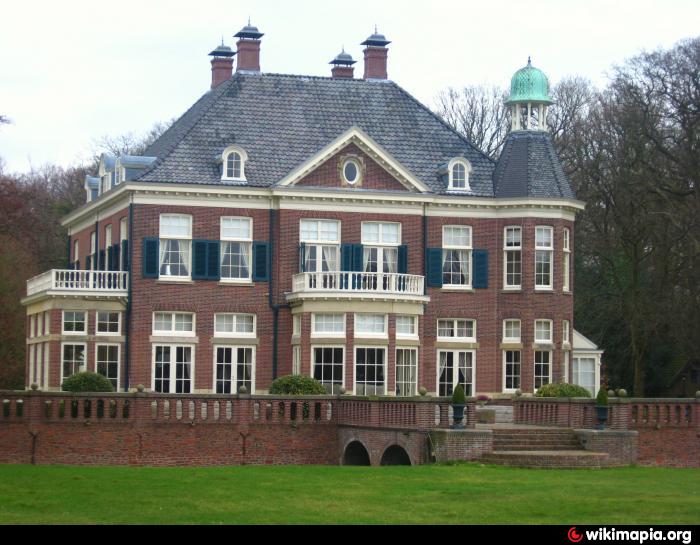
Villa Ruy in Wassenaar photo credit: Wikimapia

As I sit behind the computer and recall our chilly afternoon cycling tour, there is not an ancy bone in my body. My son seems equally content to work behind his desk on another science project without the need to be entertained. In fact, I haven’t heard that tell tale “I’m bored” that often follows too much sedentary activity or screen time since our two hour cycling adventure. I might even go so far as to say there is a certain kind of peaceful harmony in our home as we all work on our own projects.

“Mom. Can I play on the iPad?” My son asks. Where did he come from and what happened to the science project?

“Only if you practice your vocabulary list first,” I respond.

Okay. So I might have given that whole outdoor experience a little too much credit after all. At least I was true in sharing the idealistic views of a parent.
Do the Dutch Celebrate Earth Day?


The Dutch are busy with many aspects of environmentalism by default. Due to rising sea levels linked with climate change, they have become experts in water and flood plain management. (There are more reasons they have expertise in water, but that’s for another post). The Netherlands, with 17 million people in a country that’s about 1/10th the size of the State of California, suffers from side effects of high-density living, which include air pollution and water pollution. Those picturesque cows also contribute to the problem (NL has the highest count of livestock in Europe and all that pooping and methane release by flatulence has a bigger impact than you’d think!).

But besides all that, are the Dutch environmentally minded? My first answer is YES! They are big recyclers and bicyclers, they have an excellent public transportation system and there are hundreds of government initiatives and local non-profits working on environmental issues–especially in the areas of reducing dependency on fossil fuels and creating climate neutral cities. But can the Dutch party around going green? In other words, do they celebrate Earth Day along with the other billion people worldwide in 192 countries? Not so much.

But that could change this year if Earth Day 2015 the Netherlands has it’s way. This group of native Dutch as well as internationals are organizing a festival to celebrate the earth and the sustainable living movement in The Netherlands. Planned events include: a fair with environmental non-profits, soil and gardening workshops, lectures on the state of our oceans, as well as other topics, organic and fair trade food, musical performances and more. Earth Day The Netherlands Saturday, April 18, 2015 11:00-15:00 Christus Triumfatorkerk Juliana van Stolberglaan 154 2595 CL The Hague More details are forthcoming beginning in March, 2015, but feel free to mark your calendars now! Know of other Earth Day events planned in the Netherlands? Report them here! Want to find Earth Day events planned in other countries? Go to the Earth Day Network site.

The Dutch do have a national day of sustainability, however, called Dag van de Duurzaamheid which falls on October 9th, 2015. Thus a few dates in your calendar to  color green and take action for the earth.

She’s back. But is she here to stay?


Some people find the whole concept of New Year’s resolutions to be a bunch of childish mamby pamby for losers who don’t realize it’s just another day. Me? I’m a dyed in the wool sucker for hope and fresh beginnings in the New Year. And if there’s one thing I can count on, it’s me making a whole list of resolutions and tackling them with glee and newfound hope.

Counting on that momentum, mid December Kristin–whilst saying yes to a second helping of hazelnut marzipan cake and a double cappuccino–waved her hand nonchalantly as if to say “No worries! January 1st Kristin will put a stop to all this indulgence. So just keep on keeping on before the party ends!”  But a funny thing happened on the way to the New Year; I had thoughts and imaginings and even talks. But the resolutions never came.

I thought about dusting off the juicer and starting a daily routine of fresh carrot-celery-ginger juice for the whole family. I imagined signing up for a 10k and developing a training schedule. I talked quite a bit about this being the year that my son should actually enroll in a sport of some sort. I even thought vaguely about the plot of my second book, and how I’d left my lead character in the precarious situation of undergoing eye surgery while a hit man was heading toward the hospital where it was being performed.

I had the best intentions to move things forward. But cookies held sway over carrots, streaming movies via Netflix trumped time working on my second novel, and my son seemed perfectly happy sitting on his butt playing with all of his new legos, so why did I have to go and change?

But then January 14th rolled around and BAM! January 1st Kristin is here, “resolutionizing” everything in sight. I simply said no to any processed sugar for the entire day and had no problem keeping my promise to myself. I confirmed a visit to the Haagse Rugby Club and made the trip downtown with my son to purchase cleats, warm work-out clothes and a mouth guard. I resolved a half dozen loose ends with friends, work and projects and despite the ice-cold weather, I biked my son to the Haagse Rugby club at 6:00pm in the evening to introduce him to this rough and tumble gentleman’s sport.

I even scheduled a piano lesson for my son next week and agreed to a morning run with a friend from the gym who is training for a half marathon. Did I mention that I actually arranged a babysitter for Friday night so that my husband and I can attend a lecture by Karen Armstrong?

So New Year’s resolution Kristin is back, but is she here to stay? I certainly hope so, because I simply cannot endure another sugar-frosted cookie, late night movie that leaves me groggy in the morning or hearing myself whine about not taking the time to write. That’s so 2014!

Happy New Year!

The Smile


I’ve lived in Holland, or The Netherlands, for four years now. It didn’t take me all that time to recognize the smile, but now that I have seen its many permutations, I feel its about time to write about it.

The Dutch are used to being straight forward. Its one of the traits you will read about in any manual on getting to know the Dutch culture. But surprisingly, The Smile is not always intentional. And what they do with it, once it has come, is very telling.

It first appears in the eyes of a native Dutch speaker during conversation, indicating that they have noticed something. And then, as this small realization settles more firmly into their conscience, the puppet strings of the mind attached to the corner of the Dutch mouth tug upward, pulling their lips into a smirk. They can no longer concentrate on the conversation underway, as they must ask the question.

The more refined members of the population delay the question out of courtesy to the conversation unfolding. They know the question lingers, but they focus on the exchange of information between two people, setting the question aside, or even choosing not to ask it at all. They are golden; ambassadors.

Others forget their manners and blurt out the question after your first few words. And then there is the group that doesn’t even ask the question, but chooses the statement form, to show some sort of Sherlock Holmes ingenuity–as if I was trying to fool them and got caught.

“You’re not Dutch.”

The tone and word choice of my answer are influenced by a number of factors including my mood, their age and the demeanor of their smile.

“No shit, Sherlock!” (Sarcastic response appropriate for someone your age or younger, who is not a client, a member of the government, or the person about to make your sandwich.)

“No. I’m not. I’m from America.” (Polite response to be given to clients, people older than you, a member of the government, the person making your lunch and old people with hearing problems).

The problem with this “You’re not Dutch, are you?” question/statement is that the non-native speaker is then caught on a precipice of internal debate. Did they make this comment because of my foreign accent, or did I make a huge, grammatical error? Wrong verb tense, wrong word order? Shit shit shit! This sort of internal dialogue is like throwing a bucket of ice-cold water on the libido of conversation; the chances of peak performance shrivel up rapidly.

Because if you were carrying on a conversation in your native language with a fellow native speaker, no one is going to interrupt the conversation mid sentence to question you about your origin. And if they do, it has nothing to do with your proficiency in the language, but with their curiosity about your cultural background.

The following step in the dialogue is rather insightful. The Sherlock types seem to stand a bit taller, the smile becomes a bit shrewder and they take liberties to correct you at the slightest error, their eyes gleaming with a sense of domination, teaching the simple non-native the finer points of Dutch intercourse. If you encounter this type, don’t bother to talk with them further. They are a waste of your time and energy.

The ambassador types, which seem to be prolific in The Hague, are used to an international environment. They are quick to praise you for your ability to speak Dutch and the efforts you make to use their native language despite the fact that most Dutch are quite fluent in English. And most importantly, their smile, which glints across their face, is one of encouragement, not condescension.

I know you all can’t help the smile. I’m sure I do it too when I hear you speak English. When you all say “He learned me this” instead of “he taught met this”, or the way you all sound when you sing English songs; the way the words are clipped off at the wrong places; I get it. It is smile worthy.

I realize there is a cute factor, but in general, there are not many adults that appreciate being thought of as cute when they are talking to you–including you!

So, with all due respect, unless you can learn from the ambassador types described above, get that damned smile off your face Sherlock, and realize that 1) Dutch is a very difficult language without much practical use outside of your very small country 2) most foreigners don’t even bother to learn Dutch, as they can get along just fine with English here. So those of us that are taking the time and interest to learn your language are doing so out of interest in you. You don’t need to laugh at us. 3). I’m not nearly as angry as you think I am. I enjoy learning your language!

Rothko at the Gemeente Museum


Can an artist portray emotions of happiness, fear or ecstasy through the sole use of rectangular shapes of color?  Can they do so without explanation or words? That is the question that came to the forefront Saturday afternoon during a visit to the Gemeentemuseum to view the Rothko exhibit

I have to admit, his large swaths of color, with their soft edges and meditative yet simple rectangular shapes do elicit feelings in me. But not, perhaps, what he intended. We have seen Rothko exhibits before in San Francisco, and I’ve seen a sampling of his work in New York as well. But never before have I spent so much time contemplating them, and letting the colors and feelings wash over me.

imageMy tendency, as a social female and a writer, is to write about the art I see and to discuss them in terms of color and shape. But as I read about the artist, I soon realized he had an aversion to people trying to convey his art through words. Words, according to Rothko, desecrate the art. And they are not about color either; they are about the emotions; about a personal relationship between the painting and the viewer and the emotions that are evoked. They are intentionally hung low on the wall, so the viewer can “step into” the painting, and really experience the art.

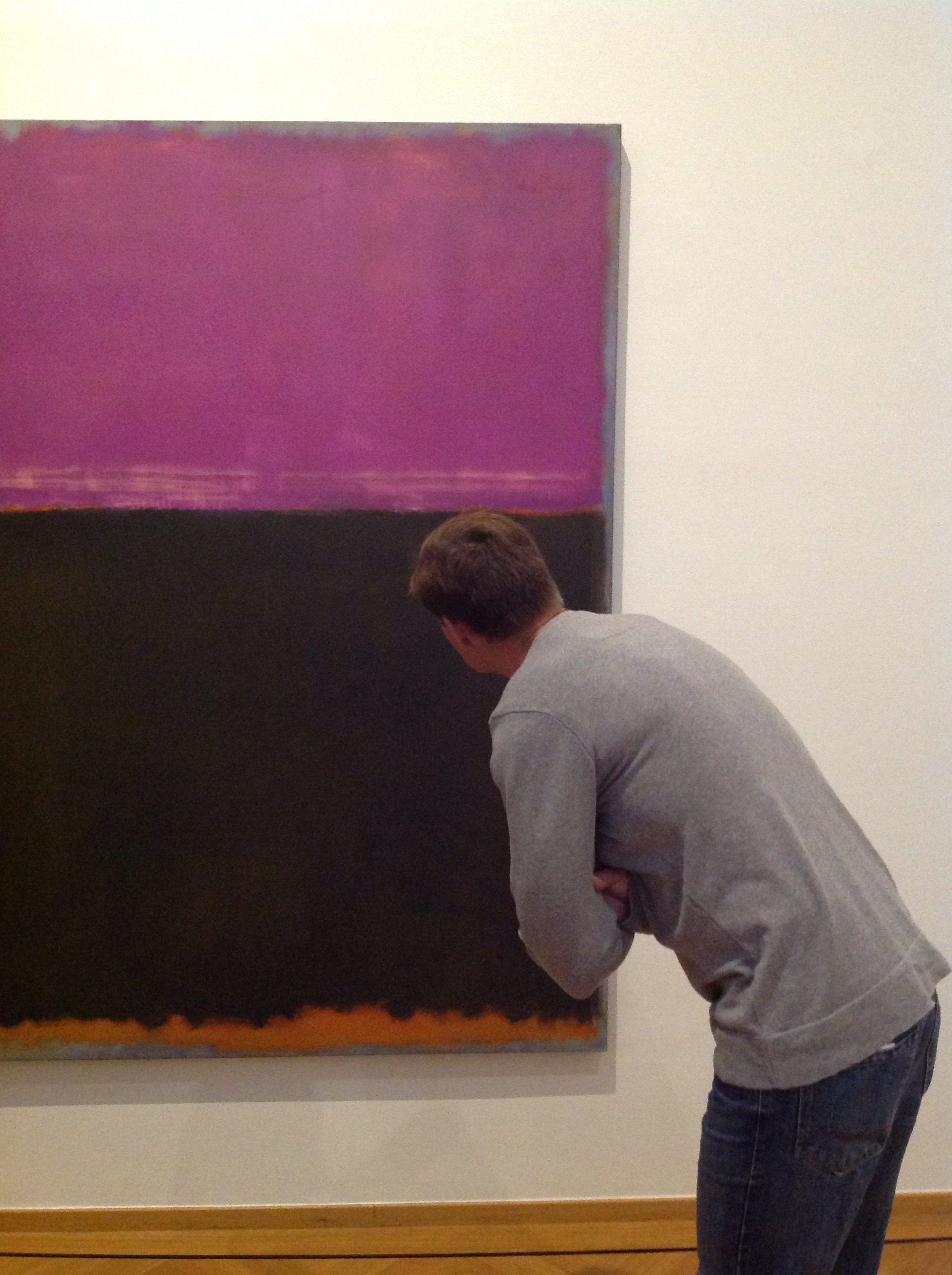
As if to drive his point home, all of his works are untitled, as in the name of the paintings are Untitled, followed by the year they were created. Thus, without a title, we lean toward a description through color. “The one with the purple on top and black on bottom edged in orange.” More words, not feelings. But colors are known to be associated with feelings and terminology.

Red: anger, passion, danger, love.
Blue: calm, serene, sad.
Gold: regal, wealthy, happy, holy.
You get the idea. Colors are also a language of emotions. Yet who is to say if these color associations are universal?

image

Coronation of the Virgin, by Enguerrand Quarton, 1454
Coronation of the Virgin, Enguerrand Quarton, 1454

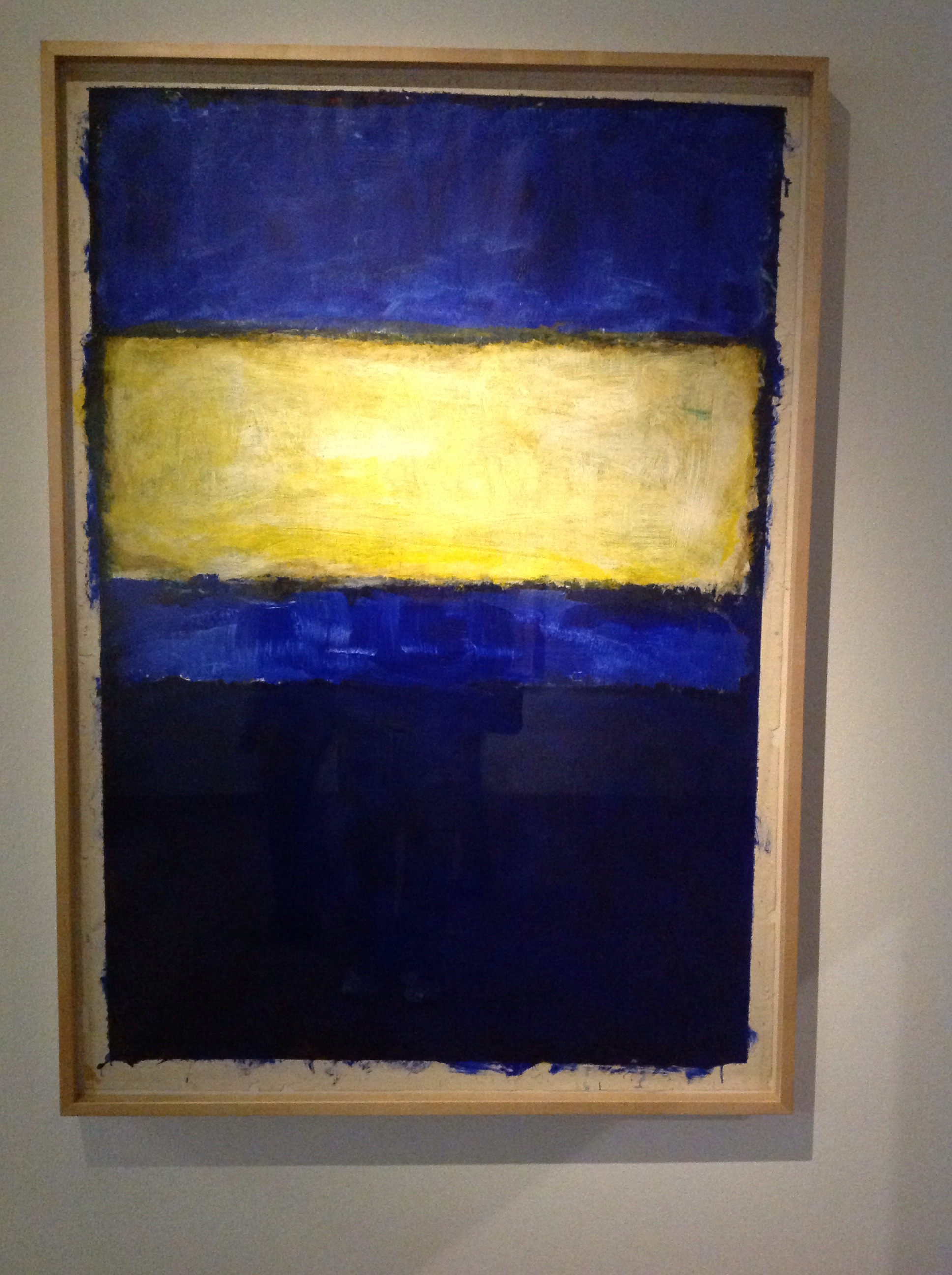
Take this untitled cobalt blue and gold Rothko painting above. What do you experience when you see it? For me, I see a spiritual work of art.

The gold rectangle in the upper third pulls to my mind the halos encircling the heads of angels and biblical figures from the fifteenth century a la Corination of the Virgin style (right). The deep cobalt blue reminds me of opulent gowns and the richness of a night sky.

But my associations have a lot to do with my Catholic upbringing and my western orientation with color and art. How would a Muslim woman or man experience this Rothko painting? Or a Hindu? Or someone with a western upbringing who has never entered a church in their lives?

Or how about the happiness and warmth I felt BEFORE I listened to the commentary about this painting. It was one of Rothko’s smaller canvases that he painted during a period of depression, right before he swallowed pills and slit his wrists, ending his troubled life. So much for the happiness that had enveloped me.

What was Rothko striving for in his paintings? As observers, we like to discuss the art. Take this man for example; he stood before the painting, gesturing with his hands, explaining a concept to his son–a concept that was not laid out in the untitle of the painting or in the curator’s interpretation of the art, as these were rather non-existent. image

So for an artist who didn’t want to be categorized, refused to participate in many group shows, and was very controlling of how his art was presented, what was he actually trying to convey?

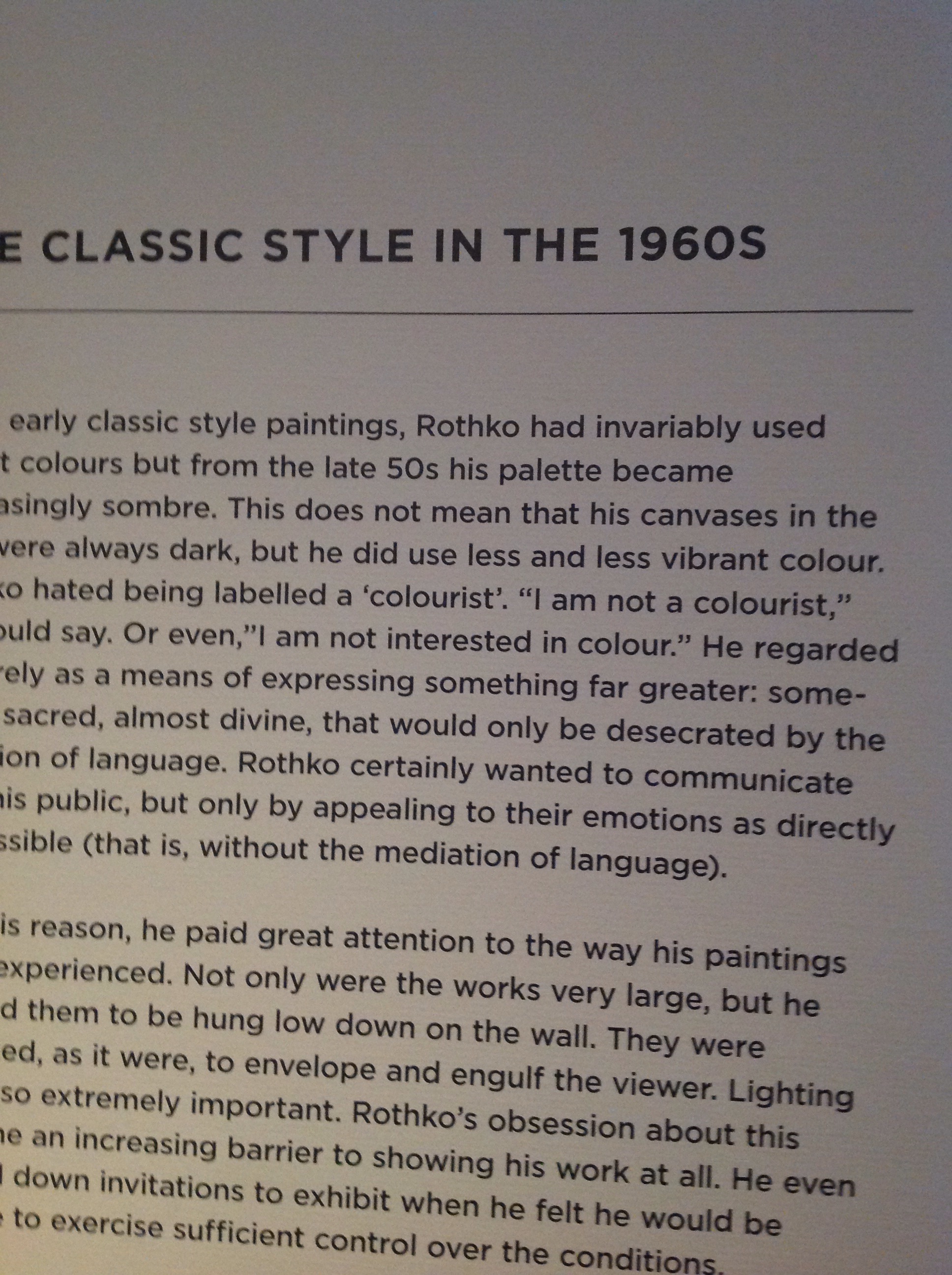
This explanation struck home: image


In case that’s too hard to read, let me pull out a few excerpts:

“I am not interested in colour.” He regarded color as merely a means of expressing something far greater: something sacred, almost divine, that would only be desecrated by the introduction of language.

When I read this, I imagine a man who was extremely controlling and difficult, but also a man that strived to connect in a beautiful way–through the core; trying to touch the essence of what makes us human.

I liken this to the conundrum that is meditation; we can talk all we want about how to do it, but it is in the practice of meditation and the silence of the mind that we get to the essence of spirit. I imagine Rothko would like us to experience his paintings in the same way: Stop talking, be in the moment, step inside my painting and experience the emotions waiting there to engulf you. Sorry Rothko, I’m using words again to imagine your artistic desires and to say just how much I appreciate the feelings you evoke in me through your art.

It’s been 40 years since such an extensive Rothko exhibit came to the Netherlands, so don’t miss your chance! Rothko’s work is on display at the Gemeentemuseum in The Hague through March 1, 2015. 


Possessions


Although I tend to avoid antique stores and second hand shops because of the crowded nature of the lay out and the often musty smell that comes with old things, I am drawn to bazaars and the hidden treasures they provide. Bazaars have an extra carpe diem appeal because they are often one or two day events at most. Thus if you find something of interest, you better get it there and then, as it literally won’t be there tomorrow. And on top of that is the glimpse into Dutch culture one gains from what people give away.

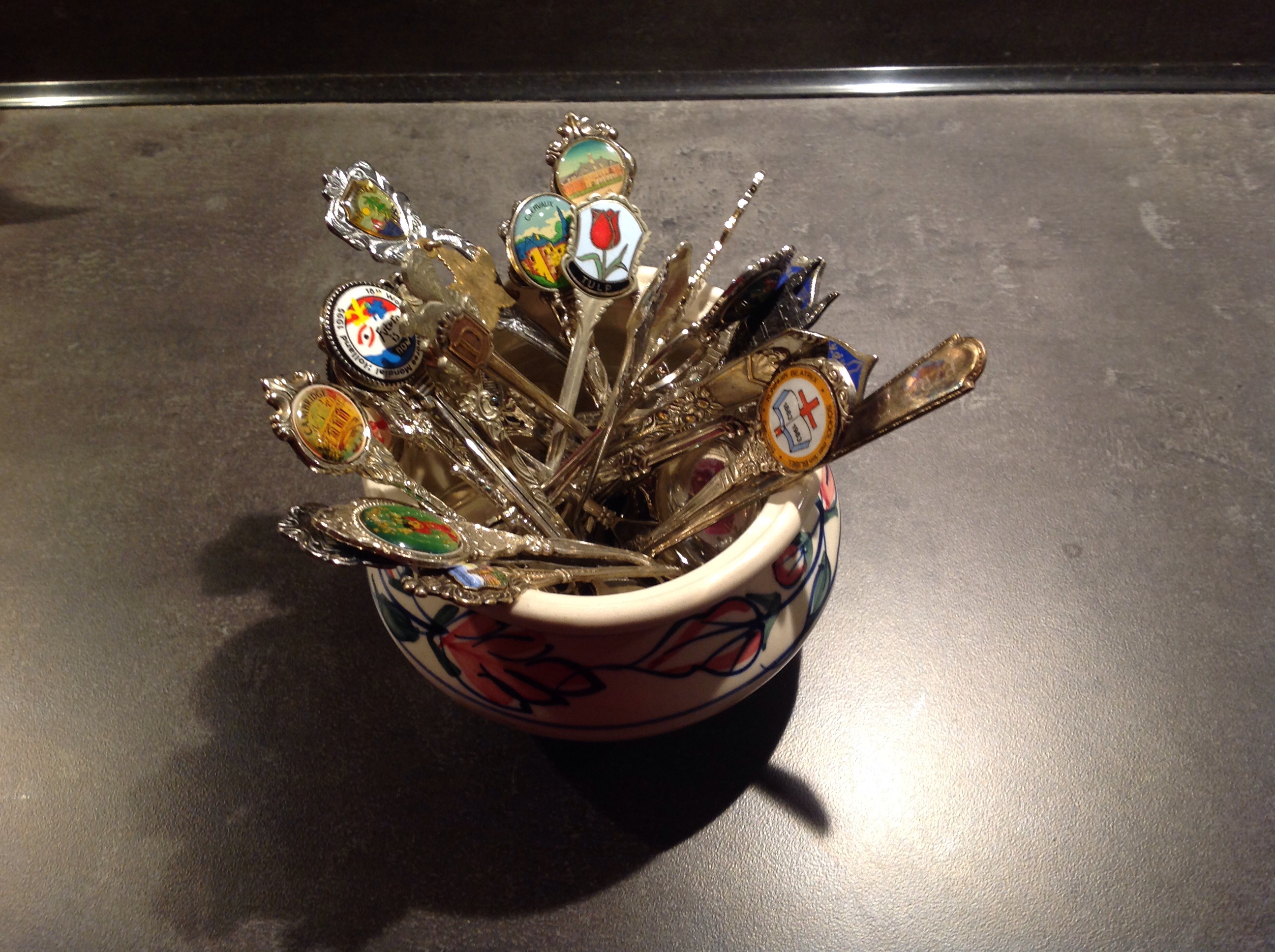
collectible silver spoons

This past May, the Christus Triumfatorkerk in The Hague had its bazaar. The bazaar items consist of what people drop off throughout the year. You can liken the offerings of the bazaar to that of a desert flower that only blooms once every two years. A lot of behind-the-scenes work and energy goes into creating this spectacular event, but it can only be appreciated for that one day.

A bright pink purse laden with pink plastic frills made its way into my shopping bag for the sole reason that I had never encountered such a bag before. Its ultra girly style, yet superior design suggested it wasn’t something on clearance at the V&D or Hema. Sure enough, an older woman in the church admitted it used to be hers. She had purchased it in Hong Kong. By the way her eyebrows raised, and my awareness of the luxurious clothing she wears to more formal events, I knew this was once an expensive curiosity handbag, now mine for two euros.

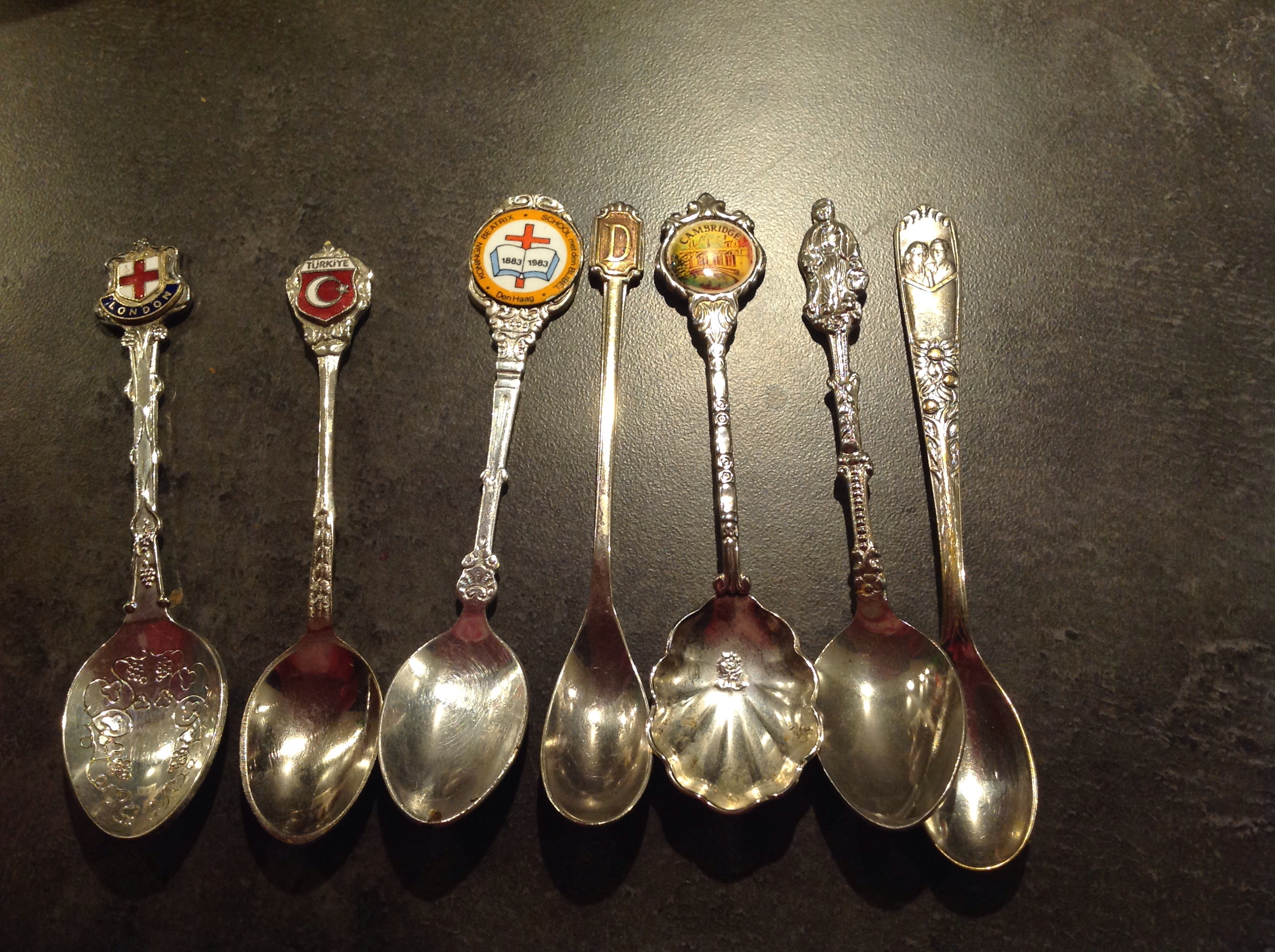
I discovered war time magazines from the 1940s with drawings and photographs of women in sensual positions mixed in with a box of books about Christian theology; I came across delicate silver spoons crested with intricately crafted cities; an entire set of muppet puppets; bracelets made of purple polished stones. I nabbed a high end backpack in great condition for 1 euro. It would have been 60 to 80 euro in a regular store.

Custom tailored suits, once worth more than a 1,000 euros, don’t hold their value at a bazaar. What would you pay? Maybe 5 euro for the whole suit? That’s roughly a 998% drop in value.

And this is where a bazaar gets bizarre; if that pink designer purse caught your fancy in the store, you might shell out the full price. But once it leaves the shelf and is in your possession, the value drops like a meteor through the atmosphere, plummeting downward to an almost sub zero value. Why is that even acceptable? How has the retail experience trapped us so completely in its cycle of consumption? And why does a brand new, name brand t-shirt donated by a children’s store marked down from it’s original price of € 40 to a measly € 2, still inspire people to barter with you on the price?

Bazaars are an inordinate amount of work in comparison to what they earn. Although the church earns an impressive amount in one day, the hours and hours logged over the span of a year from many a volunteer needed to pull it off just don’t add up to a reasonable return on investment; not to mention that the volunteers who have done this for so many years are getting older.

The younger, working generation is not in a position (or not willing) to take over this monumental task. Thus when the bazaar committee announced that this would be the last church bazaar, I understood. But I also felt a palpable sadness among the volunteers; yet another tradition slipping away.

Will there always be bazaars, or will they too become a thing of the past?

I suppose it is all relative. Yesterday, we headed downtown in search of a restaurant terrace where we could enjoy a hot beverage and The Hague atmosphere. We stepped off the tram at The Spui stop and entered through the multi-story department store V&D. They were having a “Prijzen Circus”, thus many of their items were on deep discount. And circus was an apt name, because it was mobbed with consumers looking for a good deal. This is a sort of bazaar; the difference being that in a few days, all of the items will be back to normal price, if not a bit man-handled in the process. We love deals. We love saving money. But does that compel us to buy things we really don’t need?

Perhaps I’m lecturing myself here (see more of my collectible silver spoons). But don’t you remember a tacky movie or two from your childhood where a bad rich person is on their death bed, clinging to their possessions, and the wise, moralistic character says “you can’t take it with you.”

Silver spoons from a church bazaar in The Hague

We have friends in Santa Barbara that lost EVERYTHING in a fire. The strange thing? The glint in their eyes, like they had looked into the burning flames and encountered God’s searing beauty first hand. I paraphrase here, but the gist of their message? “It felt like a spiritual cleansing. I am free of all of those possessions I have been carrying around with me. They take up mental space in your mind and soul and you don’t realize it until you are freed from them. I feel light, happy.” Not exactly the sentiments you would expect from a person who lost their home to a forest fire.

Dear God,  I am not asking for a fire. I am fine with learning vicariously that it’s high time to pare down, get rid of the clutter and get a bit closer to the true meaning of life. Now if I could only find a bazaar to which to donate all those unnecessary items.

Sometimes you’ve just got to talk to the ducks


Coincidences have been abundant as of late. I chose a book for our reading group called Flight Behavior, by Barbara Kingsolver. It’s about a lot of things involving flight, from a woman who wants to flee her marriage, a reporter who flies toward sensationalism and away from reality and the flight patterns of Monarch butterflies.

That’s not the coincidence. That’s the author playing with theme.

Where the coincidences begin is in the timing. I selected the book six months ago and it is finally on the table for our mid September meeting. Considering the majority of the book club members are procrastinators like me, this means that most of us have been reading it in the past few weeks. Thus our minds are focused on butterflies, beautiful prose and flight.

I met a friend for a coffee and she described a dilemma in her personal life that almost mirrored the main struggle of the lead character in the book. If I hadn’t been reading Flight Behavior, I might have found my friend’s desire to flap her already outstretched wings a less tenable idea. Is it strange that being so deeply inside the head of a fictional character can give you more compassion for the real characters in our lives?

And then there are the butterflies. Everyone is talking about them. I know that I have a heightened awareness to these winged insects by the mere fact that I’m reading this book. But really; I have heard the word vlinder (butterfly in Dutch) in no less than six conversations over the past two weeks.

It’s like I’m being tickled on my cheeks by the butterfly wings of coincidence. Let me just share the latest example. After church on Sunday, I was offered the left over communion bread (waste not, want not) with the thought that perhaps my son and I would like to feed the ducks in the lake. Who wouldn’t want to minister to the ducks with squares of blessed bread?

Although my son initially rolled his eyes at the idea (roughly translated as I’m Seven and a half now mom;  way too old to go feed the ducks), he was eventually on board. We had planned a walk anyway, and the ducks might be hungry.

Boy were we wrong. The ducks were acting like lazy agnostics as they slowly paddled toward us with only mild interest. It was a hot day, I’ll give them that. And the water had a strange green layer on it’s surface, which not only stank but must have made it a bit harder to swim. But still! Have you ever known an urban duck to be lethargic around free bread, already cut to bite size?

We moved on to a second, more popular duck feeding spot along the edge of the lake where more ducks were assembled. But we had competition in the shape of a four-year old girl and her father with a slightly larger plastic bag of bread. I bet you it wasn’t blessed.

Strangely, we didn’t greet each other, but competitively set up shop just ten feet apart and my son and I threw our holy bread into the water with zeal. If the first group of ducks were agnostics, these were the atheists. 

“They just aren’t hungry,” said a man behind me in Dutch. Of course he was right. We were probably the 100th group of bread throwers today. Somehow, I fell into conversation with this older man, who sat on the bench with the leisure of someone who planned to stay a while.

He heard my English accent paired with my ability to carry on a full conversation in Dutch and astutely assessed that I was foreign, but had lived in The Netherlands for a while. Due to my apparent affinity with English culture and his apparent abundance of free time, he launched into a story about a design competition he had won in Canada years ago for sculpture. He was flown to Canada to create his masterpiece. He chose to make a butterfly sculpture to represent the connection between Canada and the Netherlands. I must have looked at him sideways. Of course you did a sculpture of a butterfly. I already knew the end of this story before you even began. 

In all seriousness, I like the flow of coincidence; how if your thoughts are aligned and tapped into the world around you, the world seems to unfurl its wings with something as unrelated as pieces of bread leading you to a conversation with a stranger about a butterfly sculpture. Am I describing a portion of chaos theory known as the Butterfly Effect? Is that a coincidence? How about this? It doesn’t just exist in the physicial world. I did a search on something like “butterflies flapping their wings and a tsunami” and guess what came up in sixth place on google? Butterflies in The Hague. Say what?

Shall I just get it over with and declare September the month of the Butterfly?

My son and I walked around the rest of the lake and found a bench to sit on. We spent a good deal of time discussing a rectangular hole in front of the bench and a number of possibilities of how that hole got there: Was it man made? Did a dog with a penchant for straight edges have a digging fest? Would the hole grow deeper each time it rained? Would a duck float in the hole?

Before we left the lake my son said “Good bye ducks.” He smiled at me, as if I too was in on the duck joke.

Sometimes, you’ve just got to talk to the ducks.

Whew hew! Really?


I wrote this post a month ago, but it is strangely in synch with today’s forecast, at least weather wise.

Photo Courtesy of http://hautefashionrack.blogspot.nl/2012/01/ugh-i-have-nothing-to-wear.html
Photo courtesy of Hautefashionrack. (This is NOT a photo of the author of this blog.)

It was a gorgeous day: sun out, warm, an ever so slight breeze rustling the trees, and it was my day off. But I wasn’t feeling so gorgeous myself, clad in faded 501s, an old bright green t-shirt and my beat up Ugg boots. My outfit was matched to the task of preparing our home for the renovation that was scheduled to start soon: packing, lifting, washing, sweeping, sorting, sweating, recycling, tossing, breaking, cursing and other ing verbs associated with the horrendous task of facing the mounds of stuff you accumulate over time and putting them in places that aren’t part of the renovation.

In between all of these progressive, continuous verbs, I took our son to a play date, picked him back up and ushered him to his yoga lesson. On my walk back, an interesting thing happened at an intersection while I leaned on the post of the traffic signal, waiting for the light to change. A man driving by in a work truck yelled a “whew hew” out the window at me. It was an ogling sort of “whew hew” that made me wonder if I’d forgotten to put my shirt on or ripped an exposing shape in my clothing during all the work. But my clothes were just fine. Two men across the intersection smiled at me, both amused by the situation. I smiled back. All the smiles continued as we passed each other in the sidewalk.

What was that all about? I wondered as I walked back home. What a jerk, to yell out the window at me like that. Yet mixed in with this indignation was another, less righteous sentiment; it was kind of nice to get a whew hew! I hadn’t been “whew hewed” at in a very long time, come to think of it.

Was I experiencing some sort of epic, reverse feminist sexism Pharrel Williams style as explained in this Huffington Post article by Alana Vagianos?

Did my lack of whew hews have something to do with the little boy usually holding my hand, or my lanky husband who is quite often in my company? The layers of clothing often hiding my feminine shapes in a cold climate? My age and status as a married woman? My general avoidance of late night parties, bars and drunken scenes? Or the general reservedness of Dutch culture? I reason its a mix of all of the above.

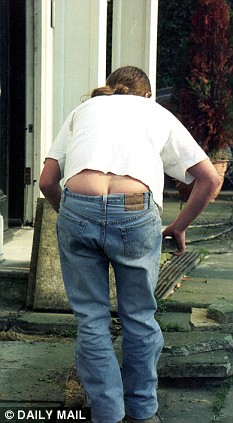
Photo courtesy of Daily Mail CO UK

I remember being in my early twenties, and walking by a construction site in Santa Barbara with a friend. My friend, whom I’ve known since I was six, is sexy by popular standards: a round, pretty face, blonde-haired and blue-eyed, curvy and scantily clad. Usually, among the construction site sounds of drilling, hammering and the beeping of reversing trucks, came the whistling and hooting of the construction workers when presented with two young women within viewing distance. That day, the last two elements of the construction soundtrack were missing.

After a series of complaints from female members of the Santa Barbara population about the sexist and rude cat calling and whistling of construction workers, a whistling ban had been put in place.

“I kind of miss the Mexicans whistling at me,” she openly stated. She got just the rise out of me she wanted; a cocktail of indignation and uncontrolled laughter.

Women are not the only ones to feel the embarrassment and the other accompanying residues of a whistle. In this 2012 Mail Online article, female college students were banned from whistling at male construction workers on campus. What started out as a joke, became an issue of sexual harrassment. But strangely enough, not a single construction worker complained.

I’ve experienced one other whistle in the past few weeks, and here are the overlapping elements:
I was walking alone
I was wearing jeans
It was a hot day
The whistler was male and driving a truck

What is your experience of whistling and catcalling in The Netherlands?


Is there a distance threshold for friendships?


When I moved abroad the first time around (Amsterdam 2004), it felt like a European adventure. I had only been to Europe once before and for a measly three weeks, not nine months. My U.S. friends were keen to hear about my adventures and when I moved back Stateside less than a year later, I picked up where I left off. My world view had shifted slightly through my European experience (not to mention the Dutch husband I acquired in the process), but I had the same circle of friends and I even managed to get a better position at the company where I used to work.

This time around I am in Europe indefinitely. My husband is half way through a Master’s program in Theology, my son is speaking fluent Dutch, and despite a clear goal of eventually moving back to the U.S., I’m getting used to European life. We all are. And not just us three, but my U.S. friends have also realized that we’re here for an unknown period of time.

And as time goes by, you lose touch. People back home know they won’t run into me at a concert, in the aisles of the supermarket or out on the beach during a sunset walk. Unless I Prine someone, or someone Prine’s me, the spontaneity has been removed from our relationships.

I have taken on a digital sheen in their lives. And although we live in a digital world and have a digital footprint–whether it is posting photos and thoughts on Facebook, sending e-mails, writing blog posts or even skyping–it’s just not the same as being there in the flesh. My U.S. friends can’t ring me up for a walk, or ask me to help them drown their sorrows from their latest break up over cosmopolitan or celebrate a recent life event over a creamy Chardonnay at that cafe downtown. I’m not there for them like I used to be. And vice versa.

And although I defend Facebook and social media on a regular basis as a worthwhile expenditure of my time, I’m beginning to wonder. Sometimes I just feel, well, detached. And yes, when I see a beautiful sunset from Santa Barbara, or someone sipping a gorgeous wine at a resort overlooking the Pacific, I experience feelings of envy, just like this WorldCrunch  article suggests. I sometimes feel lonely when perusing Facebook, just as SLATE Magazine suggested I would.

Is there a threshold for which we no longer wish to invest in  long distance friendships? I know this is the case for dating. Years ago I dated a guy in Los Angeles, but after a few months time, I felt that it just wasn’t doable; he was geographically unavailable. In general, I’m not one for G.U. relationships. Yet I feel a desire to hold onto my friendships in the U.S. Why? Because these people are my people; part of my life experience; they helped form who I am in a way. We informed each other. But social media interactions can only go so far in maintaining that bond.

And to top that off, I have friends here. In the flesh. Ones who call me up and invite me out; ones I run into in the super market or the park, women in my book club who relate to me through literature, friends from church who bond with me in another way. If I need something here, in this physical life, they are my go to people.

There is a Dutch expression that goes something like this: een goede buur is beter dan een verre vriend. In other words, a good neighbor is better than a far away friend. I understand this from the practical Dutch perspective because despite their penchant for world travel, their orientation is very locally based. But I’m fairly certain this expression was developed before the digital age wound it’s roots into our daily lives.

I’m not the only one facing this quandary. What are your thoughts on friendships that span continents? Is there a distance threshold? And does digital social media isolate you, or bring you closer to your friends and family?

Havana, Deventer, Apes and Cousins


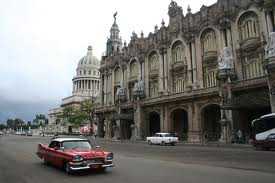
When I was in my mid-twenties, I worked for a short stint as a museum travel program assistant. Although most of my hours were spent in a tiny office doing paperwork and taking reservations, on a few occasions I actually got to travel. The most exciting of my journeys was to Cuba with two dozen wealthy clients, most between the ages of 65 and 80 years old. What soon became abundantly clear was that the attendees who had all spent thousands on the museum trip were not there to relax and gently take in the casual pace and lifestyle of Cuba; they were there to suck the marrow from the bones of Havana culture with the tenacity of western businessmen. havanaThey were there to conquer and the museum program was fully prepared to deliver. Each moment was slated with culturally inspiring activities, visits  or luxurious meals, the more unique, the better. Thus, from early in the morning until late at night, we were on the move: seeing, interacting, traveling, listening, and dining. No matter that half of the group was worn down and dragging themselves along after a few days; they continued on with an unspoken and shared vigilance, not willing to rest in fear of missing something.

The trip could be likened to a hunter on safari seeking new heads for the taxidermy collection lining the walls of the study in his or her country estate. In this case, the art, music, natural beauty and architecture of Cuba would become the prized pelts and heads to be displayed not on the wall, but in conversations at the next fundraiser or cocktail party. Why yes, I have been to the Plaza de Revolucion; isn’t the 18 century art in the Decorative Arts Museum in Havana just fabulous darling? Although I am not in these fundraising circles, I did talk about this trip for years afterward, and my experiences did impress many Americans who had always wanted to travel to Cuba.

As an American living in The Netherlands, I have that nagging conqueror voice in the back of my head urging me to approach Europe in the same manner as this group who visited Cuba so many years ago–take in as much as humanly possible, even if it wears me ragged. I have spent several vacations doing just that. After all, who knows how long we will live here, and I really don’t want to miss out.  But as time passes and I realize I am actually living here for the longer term, a local vacation also has its merits. Not only are they more affordable and less stressful,  they help you better understand the country in which you live.

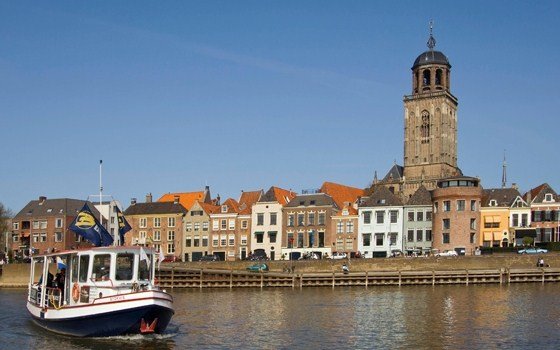
deventerThus our trip to Deventer. Located along the Ijssel river in the middle of the Netherlands, Deventer is like many old Dutch cities; it boasts a picturesque center region with charming squares and old architecture, shops and restaurants surrounded by less attractive and newer buildings and neighborhoods the farther away from the center you travel. Armed with advice of Arie Jan’s cousin, we drove across the bridge away from the city to a parking lot on the far side of the Ijssel and took the ferry over the river. Approaching by water offered us a stunning and timeless view of the city, and put us in the right mind frame to relish the old town. The side streets of the old quarter were dotted with unique, locally-owned gift stores and cafes. Of course, the big retailers such as Etos, Hema and V&D common to most Dutch cities also had a presence, but there were enough small shops to keep the charm alive.

Our son entered Koning Willem, a unique toy store filled with puzzles and games, and soon became obsessed with the brain teaser puzzle section. For the rest of our stay in Deventer, we endured his plaintive cries for puzzle man, a cube that you can turn into a robot looking man, and then back into a cube, if you can figure it out. We ate in a cafe called Brood van Joop only to discover it was their opening day. The zucchini soup was so delicious that it renewed my desire to make fresh soups a more frequent part of our family meals.

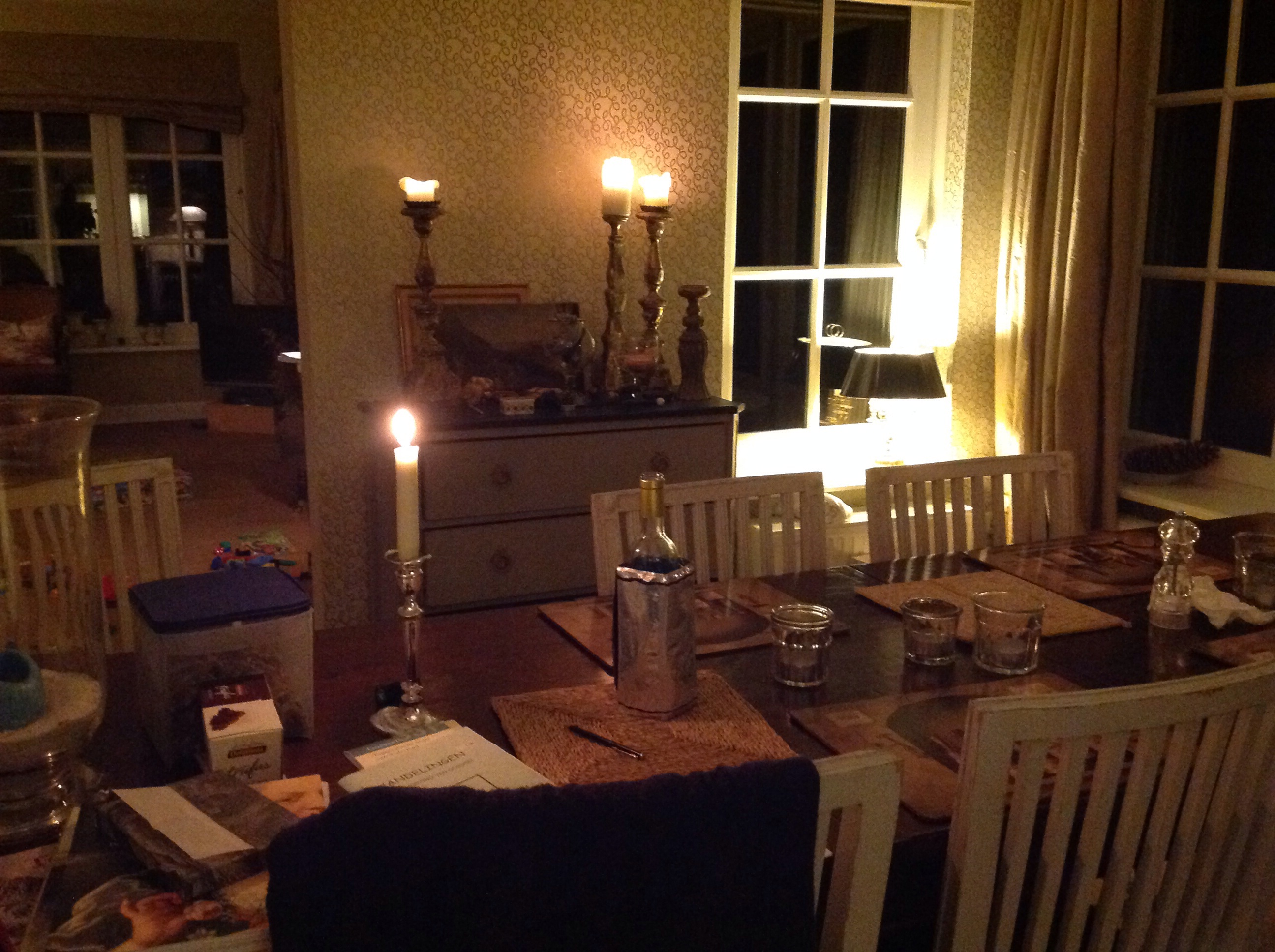
imageBy the end of the afternoon, we headed to Arie Jan’s cousin’s house in a neighboring village. Perched in the middle of a small forest, their home is straight out of a fairy tale: White walls, thatched roof, large French paned windows with expansive views to lush green gardens on the outside. This beauty was  equally matched within by a French country interior with white walls and hard wood floors, the rooms graced with the design sense of an antique collector.  An antique dealer specializing in 18th century French fabrics, his cousin has a  second story room dedicated to sewing and cutting and another room dedicated as an office. Within no time at all, I was fantasizing about writing my second novel sequestered away in one of these rooms with garden views.

As the adults settled in on the high stools next to the kitchen island to chat over tasty wines from the wine cellar, our son assembled a Duplo train set and lost himself for the next few hours in play. After our son went to bed, we ate a French meal by candlelight around the dining room table and talked to the wee hours of the morning. No. I wasn’t visiting The Louvre or sipping a latte on the banks of the Seine, but I was with family, relaxed and happy, miles away from any thoughts of work, stress or to-do lists. And that is exactly the type of vacation one needs to rejuvinate the soul and recharge your battery for daily life.

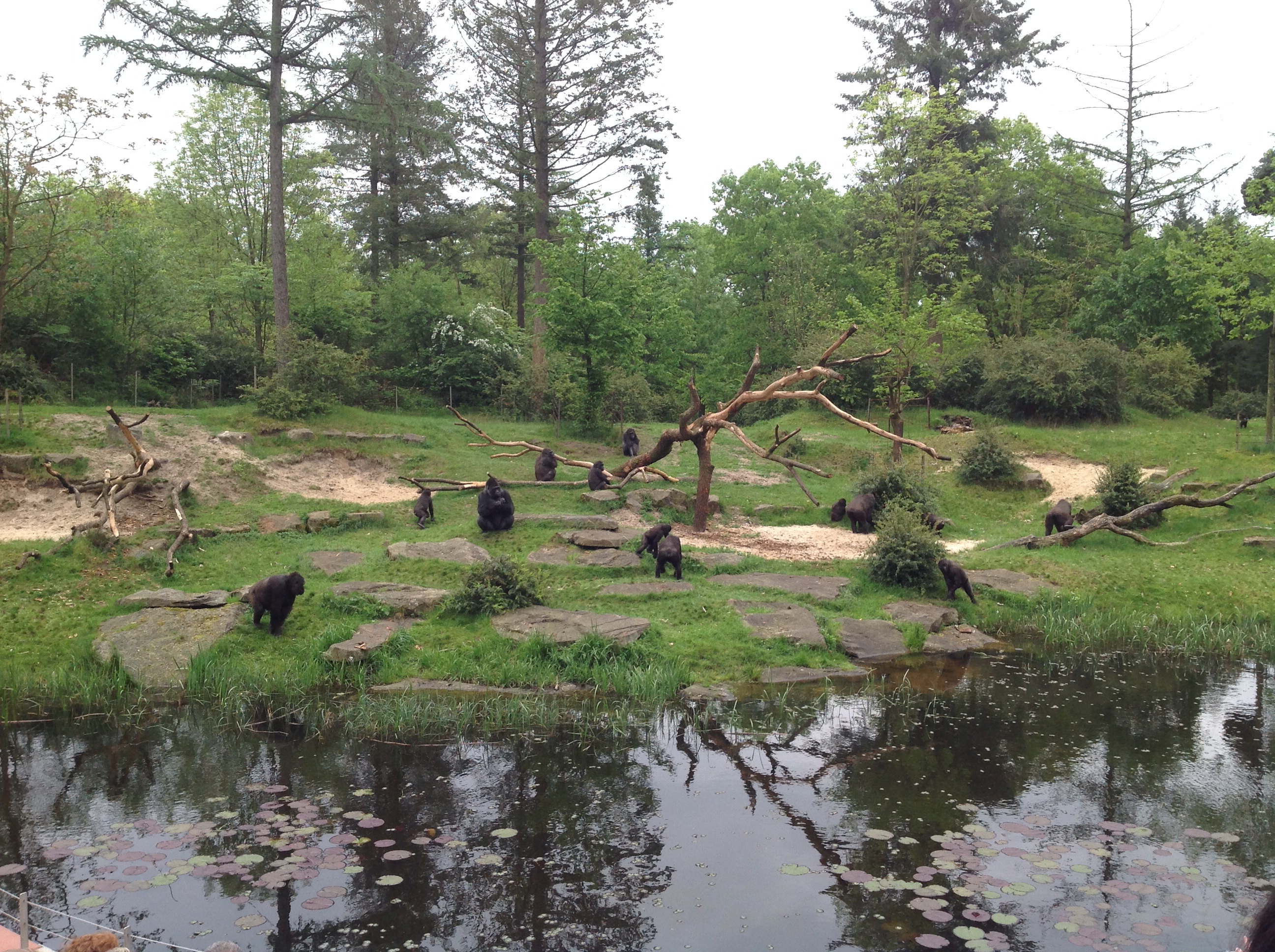
imageBut a vacation with a child needs to be about more than long, meandering conversations with friends and family accompanied by fine wine and food. And thus, we came up with an equally satisfying elixir for our son: a visit to Apenheul Primate Park. Located in the town of Apeldoorn, Apenheul is an expansive nature area filled with many species of monkeys. Unlike a zoo, there were very few cages and many of the smaller monkeys could come right onto the walking trails.

We watched monkeys swing from the trees, play with each other, cling to their mother’s backs and climb onto the arms of  innocent passersby. After three hours, we were not even half way through the park and the temperature was slowly dropping. Unlike the monkeys, we were not wearing thick fur coats. At the end of the day, we asked our son which was his favorite exhibit and his answer was far from suprising: the guerilla exhibit. We, and the hundred plus other visitors sitting in the stadium seating during snack time, were grateful for the small waterfront separating us from these strong apes not a carrot’s throw away.