He was about to leave. He did his Sunday morning four-point check: keys, glasses, sermon, vestments. Then he walked toward me but stopped short. “Oh yeah. I can’t kiss you. You’re sick.”
“Yep. Sorry.” We stood there for the blink of a moment, facing each other, the disappointment that we could not close the gap and join lips evident on both of our faces. “Good luck this morning,” I said.
After the front door shut and the house stilled, I realized something; I’m part of his checklist—a kiss on the lips before he heads out the door.
The ritual of giving your partner a goodbye kiss is as common as a morning cup of coffee. Yet it took this break in the ritual for me to see it: My husband and I kiss goodbye. We have rituals. Of course we do. After twenty-plus years together, these rituals have naturally developed—habitual, unspoken, unacknowledged, but there.
Now, he’s giving a sermon in the Protestant church three hundred meters from our house. Now, I’m in my home office, dog snoring gently on her cushion behind me. While my fellow churchgoers sing hymns, I blow my nose and think about that kiss that didn’t happen. While my husband gives a sermon, I contemplate our rituals that have formed over time, organically, in patterns as steady as the drips that form stalagmites and stalactites in underground caves. Our rituals are the micro moments over a lifetime, water laden with calcium carbonate, mud, peat, sand, and other materials that form the stalagmites and stalactites of our love, bringing us closer together, one formative drip at a time.
Oh, how this thought warms me. Oh, how this sappy analogy would make my husband gag. And still, even with our differences in personality and outlook, we grow closer together every single day. And these rituals? They’re an important part of that.
A few weeks ago while in church, I witnessed a sacred, heartbreaking moment between an elderly couple in the row of chairs in front of me. Her health has been waning over the past year. She’s as mentally sharp as ever, but as someone living with Parkinson’s, she’s not very stable on her feet anymore. That morning, she seemed to drift off into her thoughts, as if somewhere else. Although just about anyone can drift off during a church service, this was something else—something her husband was acutely attuned to: She was not well. He angled toward her, his blue eyes filled with concern as he studied her expression, her posture. Finally, she “returned,” and moved her head in his direction. He patted her hand and they smiled at each other.
I looked away, fighting back a sudden press of tears. I had just witnessed a moment. Not a ritual, but the kind of love and understanding that comes with years of living with another person; knowing their body language, their expressions, their energy, through sickness and health.
My ego tells me that my husband and I are the type of couple that will stand the test of time. I believe this with all my heart. Yet, have I been paying attention to the details? What does it say about me that I didn’t realize we’re the type of couple to kiss goodbye? Did I know that? Of course I did. But was I consciously aware? Not really. But now I know. And I plan to pay more attention to these little moments of love.
My husband is back from church. The Sunday concert has started in the park next to our house, just as it does every week through the summer months and into early October—as sure as rain in the Netherlands. And that certainly is also something not to take for granted. Those concerts rely on the actions of many people, from the guy that opens up the park and sets up the stage and soundboard, the musicians that come from far and near to play, to the audience who shows up week after week to say “yeah, this is important to us.”
This Sunday, I am apparently looking at the world around me through the soft, contemplative lens of a romantic with a head cold. And I’m thankful for it.
Bluesky is one of the few remaining social media platforms I allow myself to scroll through late at night. I feel comfortable there because it tends to lean left, and the voices of resistance I encounter resonate with me. I am still confronted with awful news about the latest Trump 2.0 attacks on freedom of speech, expression, equality, democracy, and sanity, but at least on Bluesky, this news is accompanied by a fitting level of outrage that is often absent in news reports.
But Bluesky is not just about outrage. Sometimes there are gifts. Take last night, for example. A post by Greg Andree, an English Teacher from Massachusetts, showed up in my feed. He had been threatened by an angry parent who said he was violating an executive order by teaching “DEI” books in his upcoming Liberty and Justice unit. He turned this threat into a call to action: resist and continue.
His post featured a photo of the so-called DEI books that the angry parent was protesting. Of course I bought one and immediately downloaded it to my Kindle. The title I chose was The Poet X by Elizabeth Acevedo. I didn’t mean to stay up until midnight reading, but The Poet X was so darned good that I couldn’t put it down. I finished the novel this afternoon and already chose it for book club. Other novels in the photo were the following: Hollow Fires by Samira Ahmed The Many Half-Lived Lives of Sam Sylvester by Maya Macgregor Just Mercy by Bryan Stevenson To Kill a Mockingbird, by Harper Lee Monster by Walter Dean Myers
Thank you, Greg Andree for sharing the (YA literary) wealth. May you teach America’s youth for years to come (should that be your wish!). Thank you, Elizabeth Acevedo for such an inspiring novel. May you and your writing inspire youth worldwide to use their voices and step into their true selves.
Years ago, we brought in the New Year in The Hague with Andries and Henny, my mother- and father-in-law. When I shared my excitement about making New Year’s resolutions, Henny told me she found the whole concept of resolutions childish. It was a tough moment for me. I had the utmost respect for Henny, but her reply, no matter how politely and calmly delivered, came across as quite judgmental. After all, I had just shared my enthusiasm for the concept. Was she calling me childish? Henny, a bright, kind, and gracious soul, has since passed. And as I recall this memory (quite possibly from 2011), it is no longer tainted with annoyance. Now, it has been revised into a wise lesson: Things that are precious to me are not necessarily precious to others, and everyone has a right to their own opinion, even if it differs from mine. My view of New Year’s resolutions has also changed over time. I’m no longer interested in making a grand list that will stare me in the face a year later, wagging its long, papery finger in my direction while it says: “Didn’t tick off many of these boxes, did you now?”
In 2024, I didn’t even bother to make a list. But now that I’ve hit the third week of January 2025, the resolutions are percolating in the back of my mind. These resolutions are gentle, manageable, measurable. Beneath these small steps are grander visions, but I am less focused on the grandeur and more focused on the moment.
What can I do now to get to where I want to be?
What is not serving me?
Am I ready to let that go?
If not, what’s stopping me?
Am I attached to something or someone who is a negative force in my life because I find the negativity comfortably familiar?
Better the devil you know than the devil you don’t?
Why not part with the devil altogether and step into something new?
These are the thoughts that dance playfully around the yet-unformed resolutions. If I continue in this manner, the list that I form will be a well-conceived list with the power of forethought and intention. It will have steps that I can do, little by little, to walk on the path. My 2025 wish is to recognize the path and start walking. Of course the path might take a turn I did not see. But that’s just life. I will go with the flow.
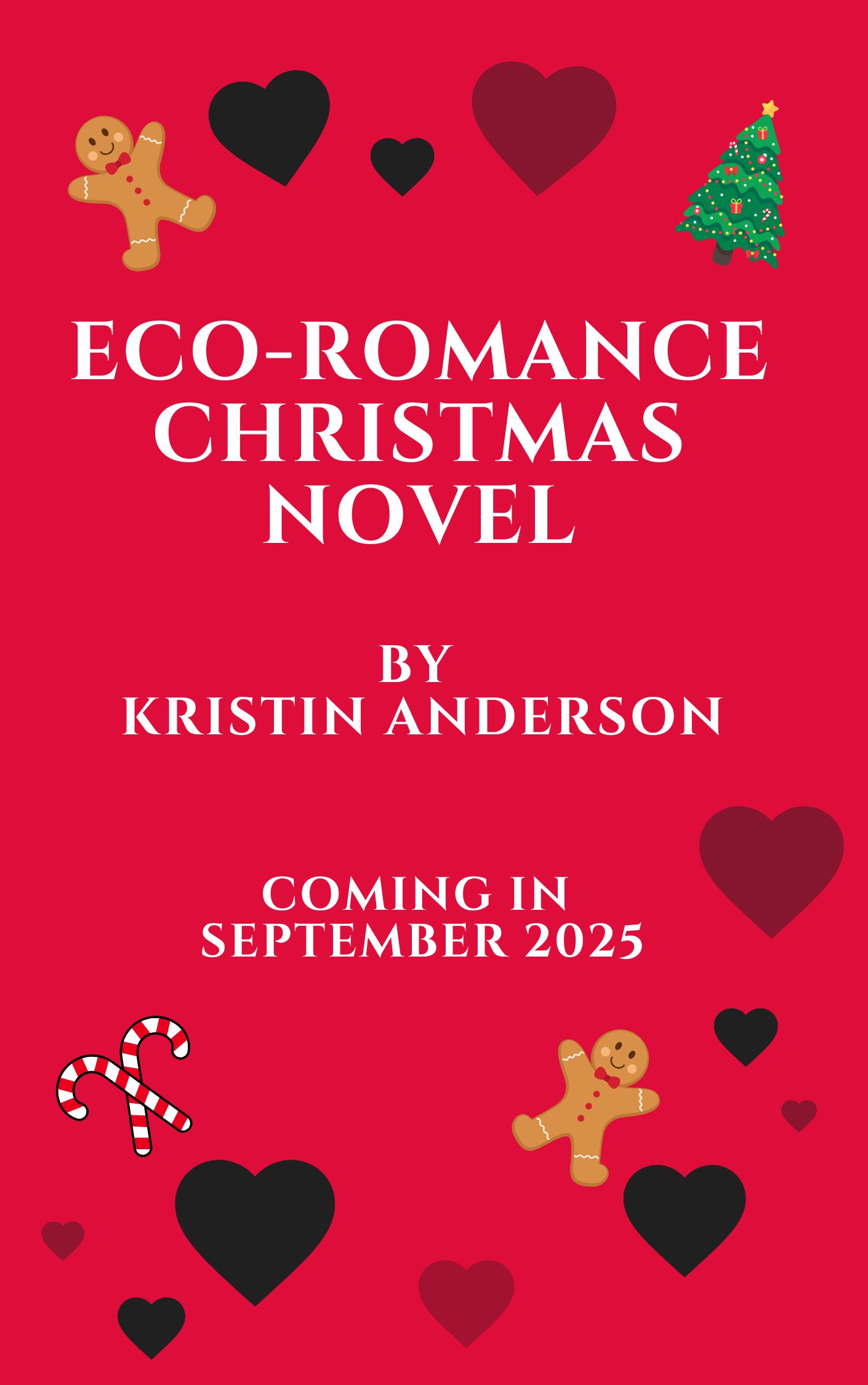
Not the real cover
For now, I have one resolution that is already taking form: Publish my eco rom-com Christmas novel in September of 2025. The first draft is already completed and the edits are back from the copyeditor. Second draft is underway and the publishing team has been selected. So this is one resolution I feel confident sharing. To hold this vision, I have made a placeholder image to represent the cover. The real cover will be designed by a professional! Want to follow my author journey? Check out my author website: Author Kristin Anderson
What was the last thing you searched for online? Why were you looking for it?
Propinquity. Because it was a new word to me. That, and naturopathic anti-itch medicine for my itchy Beagle.
Last night, my teenager returned from his new, part-time restaurant job just after I’d finished a tearjerker of a movie. “How was your shift?” I asked, trying to stifle a yawn. “It was all right. Hey, want to watch Lost with me?” I hesitated. My body said no. I had been yawning for a while now, a clear sign it was time for bed. But my emotions said yes: He’s seventeen, and he’s on his last week of vacation before school starts up again. How many chances will I have to hang out with him? Seize the moment. Even if it’s just watching a show together. “Okay, but only one episode.”
I know. Go ahead and laugh.
We sat down on the couch, and our Beagle nestled in between us like a warm and furry binding agent, keeping us fixed in place. The first episode ended abruptly with a bold, capitalized, white-on-black TO BE CONTINUED. There wasn’t even a discussion as we pushed play next episode. Watching a third episode was an accident of sorts, a side-effect of the warm and cuddly Beagle binding agent now sprawled across both of our laps, and that late-night inertia that renders viewers incapable of pushing the stop button. Netflix counts on this type of viewer inertia to increase viewing time. (If Netflix were to take us as a case study with a sample size of two, they would learn that the presence of a cuddly lap dog increases viewing time by 33.3 percent.)
I finally found my backbone at 12:38 a.m. and demanded that we turn off the TV. But shutting it off does not equate to immediately going to sleep. While letting the dog out in the garden for her final pee round, we discussed the show, its merits, and what we thought would happen next. Our conversation continued as we washed our faces and brushed our teeth. It’s amazing how talkative and expressive my son can be late at night. These animated conversations with him are some of my favorite moments in life. Yet at some point I had to cut him off. “It’s super late. We’ve got to get some sleep. We can talk more tomorrow.”
At one o’clock in the morning I stumbled into bed, angry with myself for staying up so late, yet thankful for the hang out time I had with my son.
Whereas he’s still sleeping, I awoke at six o’clock in the morning like usual. I played my pretend I’m-still-asleep game for another hour or so before I finally got up. After all, it was time to take the beagle that binds for her morning walk.
I had all the signs of a TV-induced, sleep-deprivation hangover: dry, red eyes, foggy head, grumpy thoughts, and a sense that everything was too bright and loud. I put on my sunglasses and headset and loaded a podcast so I could properly shut out the world as I walked my dog.
Jamie led us along the walking paths in downtown Schagen as she sniffed the world around her: bright green patches of grass, occasional pieces of litter, potted flowers, brick-lined paths, and manicured hedges. We turned onto a bike path and headed to a small, fenced dog park where dogs could be let off the leash. I sat on the lone bench and half-listened to the editing podcast I’d selected as Jamie caught up on her pee mail. This quiet moment in the sunshine while my dog roamed free seemed like just what the doctor ordered.
Moments later, a man entered the park with his dog. Jamie didn’t even growl. Instead, she wagged her tail and came to greet the newcomers. She and the other female dog connected instantly, and they started playing with each other like old friends.
The man sat down on the bench next to me and started speaking in Dutch. “Do you come here often?” he asked. That sounds like a pickup line, but it wasn’t. It’s a common exchange between dog owners who meet in dog parks. It had to do with our dogs, but it also reflected a general curiosity about the woman speaking passable Dutch with an American accent (i.e., me). “Rarely. I usually go to the larger dog park in the Waldevaart.”
In general, it’s easy to talk to other dog owners, as you know you have both made a similar lifestyle choice. But our conversation had another layer of casual ease to it, as if we’d met a half-dozen times before.
In addition to discussing our dogs, we talked about our spouses, our children, how long we’d lived in Schagen, our work, the benefits of living in a small town versus living in a city, our mutual love of museums, and our plans for the near future. At some point in the conversation, he apologized for his scratchy voice. “I celebrated my sixtieth birthday with family and friends at a local bar last night. Rented the whole place for the occasion.”
I wished him a belated happy birthday, while taking in the new information: we both had our own version of a hangover. Perhaps this additional commonality fostered the relaxed nature of our interaction. The conversation meandered on for a while until it came to a natural stopping point.
“Well, nice talking to you. I’ve got to go make some coffee and then do some gardening,” he said. “Yes. Nice meeting you, too. I’m Kristin by the way.” “I’m _______.” We shook hands, gathered our dogs, and waved goodbye.
I’m thankful for friendly people. I’m thankful for sunshine. I’m thankful for my Beagle whose wiggly body and sweet demeanor enhances my connections with others.
As I spell check this post, I hear my son getting up. As I read it through another time, tweaking a sentence here and there, I hear him clanking around in the kitchen. As I copy and paste this text into a WordPress post, I hear the television going on. And damn if he’s not watching Lost . . . without me.
Last week, I had an echocardiogram. This is a type of ultrasound scan used to look at the heart and surrounding blood vessels. As I lay on the hospital bed, the cardiac sonographer (the person who does the heart echo) ran a gel-covered wand over the left side of my chest. And like magic, a black and white image of my heart appeared on her computer screen.
I stared at my heart, visible to me for the first time. Valves opened and closed to the steady rhythm of my heartbeat. The sonographer turned a knob and pixelated patches of blue and red appeared on the screen, bright against the gray background. These pulses of red and blue showed my blood flowing in and out of my heart. She turned on the sound, and I heard the steady swishing of my blood being pumped in and out of the four heart valves. Maybe I was only hearing one valve at work, but still, it was pretty cool. A green shark fin line tracked my pulse, just like in the movies. For the cardiac sonographer, it was just another day at work. For me, it was a miracle.
I don’t often think about my heart. It’s just this part of me that reliably does its thing in the background 24-7, every day of my life. Yet as I waited for the results of my echocardiogram and the EKG test that followed, I gave my heart a lot of attention: you’re so steady! So reliable! I take you for granted dear heart. But I am so grateful for you. I also thought about what had landed me here in the first place.
It started with a strange incident back in July, the day after the Schagen county fair had ended. Because the fair was only 300 meters from our front door, was incredibly loud, and ran until one o’clock in the morning every freaking night, I hadn’t slept much for the last ten days. That Monday after the fair, I took the dog out for her regular afternoon walk. I had been walking for about fifteen minutes when my right ankle rolled slightly, and I fell gently asleep. When I woke up moments later, I was lying on the side of the walking path with no recollection of falling. My dog was sniffing in the grass nearby, completely unconcerned with my sudden choice to take a nap. A woman came over to me and asked if I was all right. I was a bit dazed and confused, and although it was pretty darned obvious that I had fallen, I wasn’t sure how I had ended up as I did. So, I said the first thing that came to mind: “I’m fine. Thanks for asking.”
“Okay,” she responded. She looked a bit concerned, but she took my word for it. She hopped on her bike and cycled away.
I started to push myself up, and that’s when I noticed the pain in my knee and shoulder. My knee must have hit the pavement. I rolled up my pant leg and indeed, my knee was scuffed and red, but not bleeding. I also seemed to be positioned in a way that suggested I’d flipped over. I pushed myself up and decided to cut the walk short. As I headed back home, I chalked up the incident as the result of exhaustion. But when I told a friend about my fall an hour or so later, she said, “You didn’t fall asleep. You fainted.”
Darn. She was right. When I ran it by my medical friend, she guaranteed me that while there are people who sleepwalk, no one just falls asleep while walking. Her advice? Go see a doctor. I got an appointment a few days later, and after a thorough examination, my doctor said I seemed to be fine. But for clarity, she wanted to refer me to a cardiologist. That sobered me up. Was there something wrong with my heart?
And there I was, six weeks later, waiting to discuss the results of my tests with a cardiologist. The more I focused on my heart, the more stressed out I felt. I mean, these results could go either way. I opened up my Duolingo App and continued my journey into the French language. I was no longer thinking about my heart, but how I wished I’d studied the vocabulary about food BEFORE our trip to France.
“Mrs. Anderson?”
A woman in a white coat stood in the hall, waiting expectantly. That would be the cardiologist. I followed her into her office, and we went over the results. My heart was in good shape. Everything looked normal. Thank goodness! She asked me to recount my story of when I passed out. I told her something similar to what I just shared here with you, and her brow wrinkled in concern.
“Everything looks fine, but I’d like to do one more test just to be sure.”
Sometime in September, I will go in to have a bunch of electrodes attached to my chest which will be connected to a little box. A quick Safari search (trying not to support the Google monopoly), suggests this apparatus is called a Holter heart monitor. The box will monitor my heart overnight and provide the doctor with a better picture of how my heart functions. It felt good to have someone so interested in the health of my heart.
If you are someone like me who has lived without any (known) heart issues for most of your life, you probably haven’t given much attention to your heart. That’s fine. But it wouldn’t hurt for all of us to think about that little miracle beating in our chest and do everything we can to honor it.
Here’s a list of five things you can do for your heart:
Eat heart-healthy foods.
Get off your duff and exercise.
Quit or cut back on all those exciting things that remind you of your rebellious youth. (alcohol, cigarettes, recreational drugs, and other stupid, unhealthy habits)
Don’t let Netflix automatically play another episode at 11:00pm (e.g., go to bed on time and get some quality sleep).
Chill. Stop stressing about things.
Here are four articles about heart health to back up my casual list:
Speaking of our hearts, each story we write has a heart beating in the background. The health of our story heart is essential to our story’s success. I could go on, but I’ll save that for another post!
Signing off,
Kristin Anderson (author, copyeditor, and proofreader)
I’m sick of playing hide and seek with the Dutch sun. It’s supposedly “morning time,” but the sun isn’t holding up its end of the bargain. Instead of shining gloriously through the windows, it’s secreting away behind a thick wall of dark gray clouds, biding its time.
Days go by like this.
I walk the dog through a dark and misty whatever-time-of-day it’s supposed to be. I’m back home working behind my computer in my home office. Because it is so dark outside, I turn on the overhead lamp. I sip my hot tea, get lost in my work, sip my cold tea. Suddenly, my office fills with sunlight.
I snap out of work mode, quickly save my document, and run downstairs. I pull on my shoes and go outside. Brrr! I run back for my coat, slip it on, and hastily zip it up before sprinting to the back door. The bench on the patio is damp from the rain, so I stand, thankful to feel the natural light on my face. I close my eyes, seeking the sun’s warmth on my eyelids, but the light fades to dark. I open my eyes. The sun has sequestered itself away again behind a bank of dark, swiftly moving clouds. Game on! Were someone to ask me to describe myself in one sentence, I’d say something like this: I am a S.A.D, listless Californian, untethered and drifting in the gray abyss of the Dutch spring.
I turn on the kettle and wash a few dishes while I wait for the water to heat. I drink another cup of hot tea as if this liquid heat can make up for the sun’s absence. I look up S.A.D., or Seasonal Affective Disorder on Wikipedia. Check. Check. Check. Armed with a handful of vegan cookies, I go back to work. While working, I calculate the distance from my home office to my bedroom. No one would know if I took a nap in the middle of my work day . . .
The ongoing game of hide and seek I’m involuntarily playing with the sun takes a break for the evening, but starts anew the next morning, if you can call it that. Despite the glass wall and sliding glass door that make up one side of our dining room, we are in the dark as we eat toast and drink English Breakfast tea. I’m grumpy and irritable, on the verge of tears. I turn on all four of the living room lights. It helps. A bit.
I take a Vitamin D supplement before slipping on my raincoat and head out into the drizzle of a dark and sunless sky for the Beagle’s “morning” walk. Jamie the Beagle seems unfazed by the weather. She wags her tail jubilantly, and I try to connect with her joy. I’ve almost embraced the whole living vicariously thing when I discover the source of her joy–an unearthed pile of cat poop. She knows I know what she knows, and she lunges for the tasty morsel. She’s faster, and gets in one bite before I can yank her away. Disgusted, I firmly lead my naughty dog down the brick sidewalk away from her happiness.
The cold drizzle slowly dampens my face and communes with my tear ducts. I’m a grown ass woman. Am I really going to cry about the weather?
I see my neighbor, Jan K, who is working in his wild garden in the rain. There are many bright flowers in his garden that I might describe as radiant, rain-kissed, and cheerful if I weren’t in such a foul mood. Jan greets me. I say nothing about his beautiful garden. Naturally, our conversation is in Dutch, but it goes something like this. “Hey Kristin. Good morning! How are you?” He is genuinely cheerful despite the overcast sky and the film of water on his face, hat, and clothing. “I’m . . .” my tear ducts flip a switch, and they are now part of the autonomic system I cannot control. My voice is unsteady and hard to hear. “I’m a bit depressed,” I admit. “Not sure why, exactly. Probably just this dreary weather. ” I go for a smile, but this function seems to be temporarily out of service. “All this gray . . . it’s getting me down.” Jan’s smile is effortless, and it reaches all the way up to his deep glacier blue eyes in a way that could only be labeled as mischievous. His hands turn Shakespearean in their gestures as he responds: “It’s been raining for days, and my husband doesn’t help with the cleaning, and my teenager doesn’t listen anymore,” he says theatrically, the spitting image of me. “And my dog doesn’t listen,” he throws in for good measure. “She just ate cat shit,” I confirm. My face has also flipped a switch, because like my tear ducts, the smile that breaks across my face is beyond my control. “Have you been spying on me, Jan?” I laugh. I don’t remember the rest of what we say to one another, but there is spontaneous singing involved, and a lot of uncontrolled laughter from both sides.
I continue my drizzly walk under the overcast sky and out into countryside. My dog discovers fresh pellets of rabbit poop and soggy reeds of grass rotting at the edge of a water ditch, and she is a sixteen-kilo ball of wiggling pleasure. I feel no need to yank her away. There’s a small patch of beautiful, rain-kissed yellow flowers at the edge of the road. Two ducks are gliding along the rain-dappled surface of the water ditch, quacking to one another. The sheep are hunkered down in the grass, biding their time. The sun is still hiding, the drizzle keeps on drizzling, but something has definitely shifted. And I know who to thank for that.
If someone asked you if you wanted to walk eighteen-plus kilometers in the dark through wind, hail, and rain, and warned that you wouldn’t be finished walking until close to one o’clock in the morning, what would be your response out of the options provided below?
A. You’re joking, right? B. No thanks, but good luck with that! C. Sure, that sounds like fun!
If you chose A or B, I would consider you to be a perfectly rational human being. Yet I chose option C, as did 650 others, who put on their walking shoes the evening of Saturday, March 23rd, 2024 and braved the crazy weather to walk at night. Before you think that there is a collective craziness spreading through the Netherlands, let me give you a bit more context.
We participated in Walking Wieringen by Night, a well-organized, festive event. The walk had a theme (Winter!), a set route that had been decorated in line with the winter theme, a number of stops along the way for refreshments and cheer, and a party at the finish line. People all over the Netherlands attend these evening walking events, and they usually sell out just a few hours after tickets go on sale.
“Ahh,” you might say. “Now I understand!” With this new information, you might even have chosen to participate as I did. Our assigned start time was 7:50 p.m, which meant there was little chance of missing the rain that would hit around 11:00 p.m. We arrived at the parking lot at 7:40 p.m, and parked in a soggy field by the dike. While we put on our jackets, strapped on our safety lights, and donned our mittens and wool beanies, we saw a line of walkers in brightly colored lights walking up the road to the top of the dike.
At the registration booth, a volunteer checked our tickets, then gave us each a lanyard with plastic flash light and showed us how to attach our tickets, which we would need to get stamped along the route to receive refreshments. “You’re the last group. If you hurry, you can make it. Enjoy your walk.”
We were surprised to hear that we were the last group, and a bit taken aback with the instructions to “hurry.” How does one hurry along an 18-kilometer walk through the darkness? Plus, we still had to rendezvous with Mariola, and once united, the five of us planned to stick together. This meant we would be walking at the pace of the slowest among us. Julie, like me, is tall and long legged, and we tend to walk briskly together. But I hadn’t walked with Ola, Mariola and Maria before, and all three of them were much shorter than Julie and me. I wondered how those short legs would fair on such a long journey. My concerns disappeared the moment we set off: short legs can also walk quickly!
We passed a spot with a few volunteers and they repeated what was soon to be the theme of our walk: “you are the last group. You need to hurry.”
It didn’t seem like such a bad thing to be the last or to be separated from the masses. We had the path to ourselves, and didn’t have the hassle of being jostled around in a crowd.
Yet a crowd does add a festive element, and it’s absence was palpable. It was as if we were participating in a half-marathon without encountering any other runners besides the friends we set out with.
We saw all of the festive decorations along the way, but there were long stretches of the route where an empty expanse of road stretched out in front of us, devoid of others.
Luckily, we had each other: a Canadian woman, an American woman, and three Polish women. We chatted incessantly, drifted into silence, chatted sporadically, commented on the surroundings, the decorations, all while our feet carried us along the route at a swift pace.
About five kilometers in, two cyclists in yellow vests stopped us and informed us we’d missed a turn. Luckily, we had only strayed about a half a kilometer from the route. They made sure we got back on the right path, and then stated the theme of our journey: “You’re the last of all the walkers, so you need to hurry.”
Although we were thankful for their help, our smiles were beginning to wear thin. Why was everyone rushing us? The tickets dangling on our lanyards expressly stated that we had until 2:00 a.m. to finish the route, and we were certainly walking at a good pace. The cyclists also informed us they were the “sweep up committee,” or the two assigned to cleaning up after the last of the participants.
We continued on into the countryside, and from a distance, we spotted a brightly lit booth on the side of the road, and could hear the pleasant sounds of people having fun together.
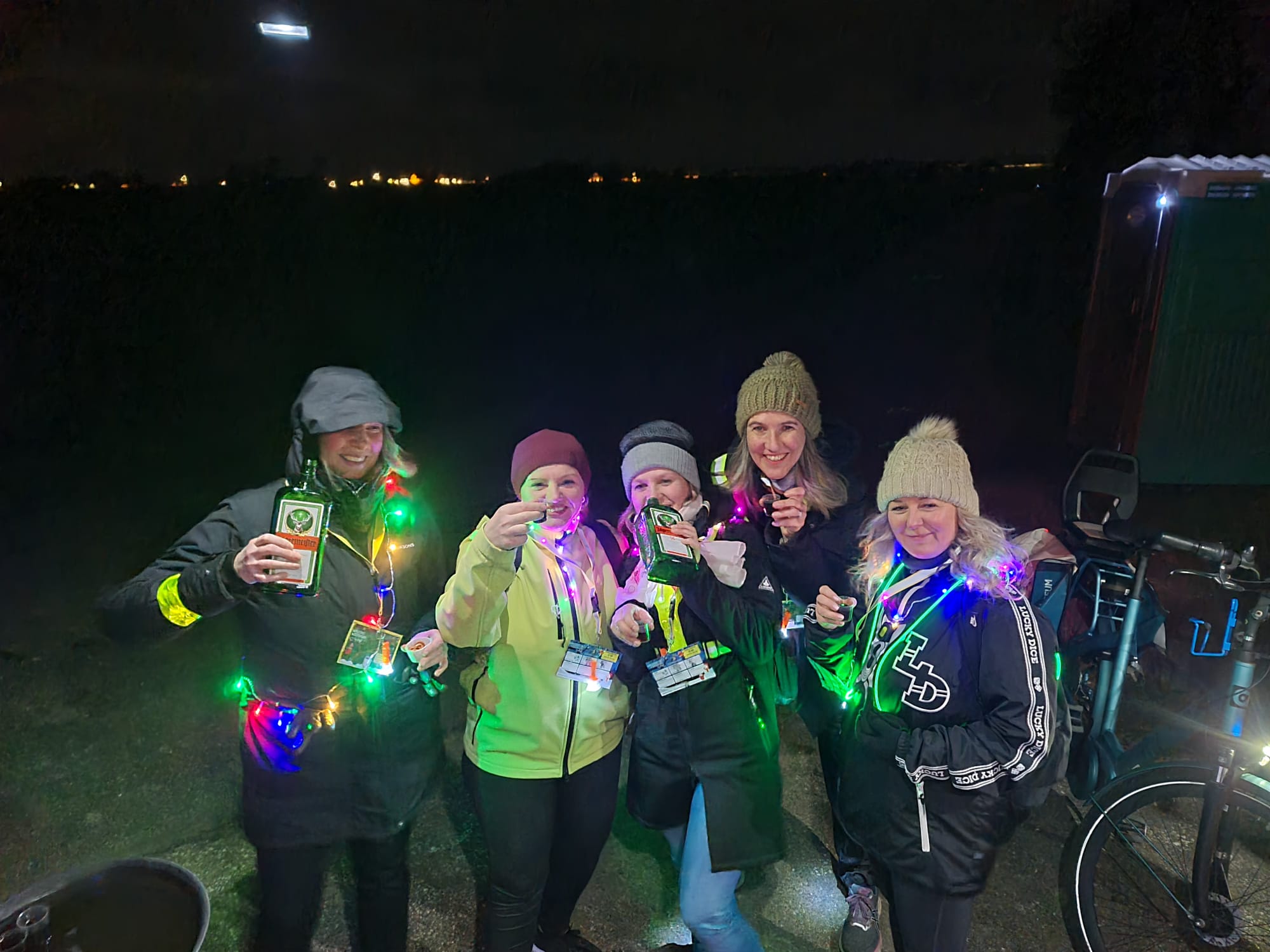
We soon reached the booth, and cheerful volunteers offered us little plastic shot glasses filled with Jäegermeister. I hadn’t had a shot of Jaegermeister since my college days, and the sickly sweet liquid seemed like the perfect elixer for this evening walk.
We soon reached a neighborhood and a group of locals partying in their front yard cheered us on (see video below). They wouldn’t be the last of the locals we encountered who had turned the event into a party. There were countless households festively lit, and bright lights and winter-themed decorations from skis and skates, to snowmen and bob sleds, appeared along the route.
Imagine the effort it must have taken to decorate 18 kilometers of paths and roadways!
Supportive bystanders: Walking Wieringen at Night 2024
Looks like fun, right? But hold on. Let me tell you a bit more. Although 800 people signed up, close to 150 of them canceled, and most of those cancelations were last minute due to inclement weather. And when I say inclement weather, I mean this!
We were barely half way when the downpour started. Around this time, I accidentally stepped into a puddle, and my left shoe was soaking wet. With continual downpours, it didn’t take long for my right shoe to get soaked as well. (I should have brought that second pair of socks I talked myself out of!)
We encountered many more festive volunteers along the trail who perked us up with tea and “oliebollen” (a bit like a ball of deep fried pancake), pretzels and juice, offers of more alcohol, and pleasant cheers of support.
We kept encountering the “street sweepers” on their bicycles, who repeatedly told us to hurry up. We all agreed that this prodding was not only rude, but it dampened the festivity of the event. It was quite surprising that none of us raised our middle fingers and told them off.
My sodden feet started to ache, and although we were still talkative, the stretches of silence began to grow longer as our legs grew wearier and the rain continued to pour. Then, around kilometer 12, we did what countless others have done while marching along: we broke into song. Given the winter theme, Julie and I started singing Christmas carols, and even harmonized on a few, including Silent Night. Maria, Ola and Mariola graced us with a Polish Christmas song, and our flagging energy was renewed.
We reached the museum in Stroe twenty minutes before midnight, and were able to step out of the rain and listen to a bit of late-night cheer. This was perhaps my favorite stop on the route solely for this woman’s performance.
We reached the finish line around 12:30 and joined approximately 100 others reveling under the shelter of a party tent. I arrived home around 1:30am, wet, cold, and beyond tired. My conservationist principles went out the window as I took a twenty-minute long shower, letting the water flow over me until my deathly white feet finally got their circulation back.
Thirty-six hours later, my once wobbly legs are back to normal and there’s a dog that needs to be walked. It’s time to slip on those tennis shoes and see if my feet are up for a much shorter challenge: Walking (a dog in) Schagen by Day.
Happy 2024 everyone. I’m not sure what your end of year looked like, but whatever was on your calendar, I’m betting it was probably as busy as mine: wrapping up work deadlines, planning recipes, buying gifts, holiday get togethers with friends, Christmas services, extended family coming for Christmas dinner followed by a Christmas brunch the next morning, overnight company, New Year’s Eve festivities, New Year’s Day run. All of this interspersed with daily online interactions with friends from far and near, and I had my first New Year’s resolution: a self-imposed silent retreat.
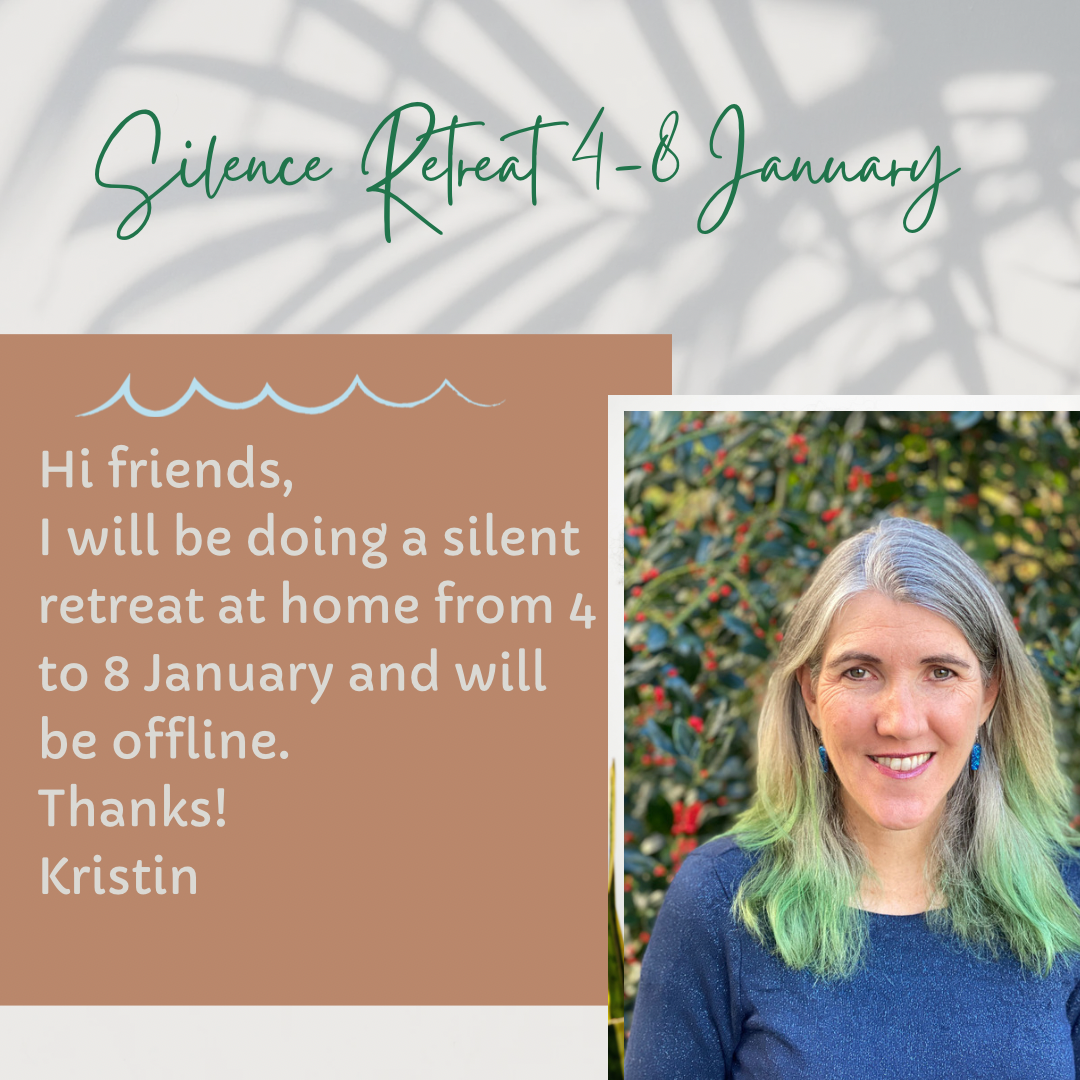
To avoid the awkwardness of unanswered calls and chat messages, I announced my planned retreat to my friends and clients via the image pictured here. “Does that mean a break from all technology?” My friend Cami asked. She dropped a definition of a silent retreat into our WhatsApp chat, and I realized I hadn’t fully defined my own parameters. What I did know was, barring an emergency, I would not be speaking to anyone, not even to my family.
Regarding technology, this would not be a cold turkey retreat. I still planned to write and read online, listen to my meditation and chanting app, and maybe even listen to an insightful podcast while walking. I had signed up for Yoga with Adriene’s 30 Day Yoga Challenge (free on YouTube), and for the 30 Day Vegan challenge, which meant following YouTube videos and reading the vegan challenge tips via email and following their recipes online. That’s a lot of challenges converging together in just a few days, but it didn’t seem daunting; if anything, it seemed like a symbiotic trio of kindness to my mind, body, and spirit (and to the animals I would not be eating!). Movies were definitely off the list, unless they were silent films. This was a time to break my Netflix addiction as well. “This is going to be challenging for me, I think.” I wrote to my friend Annemarie when she wished me a good retreat. “Ha! I think that’s an understatement” she wrote back. I could have taken offense by her comment, but she was right; I’m a social butterfly with a screen addiction. “Extremely challenging!” I replied. Only time and silence would tell if I could pull this off.
And I mustn’t forget to mention the book. For close to two decades, the book You Can Heal Your Life by Louise Hay has been recommended to me over and over again, but for some reason, I had never gotten around to buying it, let alone reading it. The title hadn’t come up in years, but when my Belgian friend Neelke started voice messaging me about a book that had transformed her life (you guessed it! You Can Heal Your Life), I knew it was time to finally order it. It had long since arrived, and has been sitting patiently on my living room bookshelf, occasionally winking in my direction. So when I planned my four-day journey into silence, I picked up the book and decided it would be part of my retreat.
I started my retreat on the afternoon of January 4th after returning from an overnight trip. When I arrived home, our house, which I’d made the effort to clean before I left, greeted me with warmth and stillness, and I walked into the silence with instant gratitude.
With no one to talk to, and with my phone on silent, my focus shifted to my surroundings. Afternoon sunshine shone through the windows as I sat on my couch and looked around our living room. At first, I saw the dust on the coffee table, a few cobwebs in the corners, a stack of books on the ground that had toppled over, and a wadded up ball of Christmas wrapping paper that had escaped my attention earlier. But instead of jumping up to clean, straighten, and recycle, I let it go. I continued to sit quietly and observe. Slowly, I saw the abundance all around me: the hot cup of tea in my hands, our bookshelves full of interesting books, the cozy blankets folded up on the couch, the furniture we had been collecting and arranging to create our idea of home, the bright and happy colors we had chosen for our walls, the dark green plants lining the windowsills. I was filled with gratefulness.
I followed a Yoga with Adriene session online and then topped it off with an Art of Living meditation. I read the introduction to You Can Heal Your Life, which is basically Louise Hay providing a summary of her outlook on life, and what she would be presenting in the book. I think I would be breaking some copyright law if I shared all the insightful things I read and underlined, but I’ll share this one to start: “Most of us have foolish ideas about who we are and many, many rigid rules about how life out to be lived.” -Louise Hay. I was only on page two, and this book was already acting like a personal diary of my life, which was proving insightful, but also hellishly confrontational.
By the time Richard the dog whisperer brought Jamie back home, I was in full, contemplative, quiet mode. When I opened the door, instead of speaking, I greeted him with a smile. When I responded to his words with a nod, he seemed slightly confused. Clearly, he hadn’t yet seen the silent retreat message I’d sent earlier in the day. I silently waved goodbye, brought Jamie inside, and shut the door.
“Hey Jamie girl, did you have a good–“ Oops! Silence is silence. I hadn’t thought about what this would mean for the dog. Would she find my silence strange? She’d spent many a night nestled on my lap as I read or watched television, but usually I would talk to her a bit, or talk to another family member who came into the room, video chat with my mom or brother in the US, or dictate a message into my phone. Yet the dog’s response would be the least of my concerns.
This retreat would be running in parallel with normal family life, with all of my regular duties and responsibilities in full swing, minus talking. I’d soon see how that played out, as my family would be returning from their father-son getaway that evening. I started reading through the vegan challenge recipes and settled on one. Usually, I put on the radio or listen to a podcast as I cook, but that evening I prepped in silence. It wasn’t like I hadn’t cooked in silence before, but conscious silence is quite another thing. My senses seemed to be on hyper alert. I noticed the structure of the vegetables I was slicing, the sharpness of the blade, the sizzle and aroma of the onion and garlic as they landed in the hot olive oil. Once dinner was prepped, I returned to the couch, pet the dog, and read a bit further in You Can Heal Your Life.
The book presented an exercise which instructed me, the reader, to write down all the things I should do in my life. The words “I should” were followed by a few blank lines to indicate it was time to make a list. My list of “shoulds” pulled me out of my happy place. I should try to generate more clients. I should exercise more. I should get a full time job instead of being a freelancer. The list rattled on. Finally, I wrote, I should just chill. And damn if that didn’t feel right! But as I read further, I realized that Hay had presented her audience with a trick list to get at the areas in our lives where we’re stuck. She then instructed her readers to reframe that same question and say “I could.”
It wasn’t the first time I’d heard of the power of “could,” but in my present state of mind, it rang true. I could get a full-time job, but I don’t want to. I enjoy freelancing, so why would I trade it in for something I don’t really want to do? And I could work on getting more clients. That rang true as well. Yes, I could do that. Talk about a breath of fresh air! Just by reframing a statement, I had room to breathe and room to explore. I closed the book and allowed myself to follow the statement that most honored the present moment. I should just chill. I could just chill. Let’s chill, girlfriend. You’re on a retreat!
The silence was soon shattered by a bustle of sound: a muffled conversation outside the front door followed by the scrape of a key entering the lock, then a boisterous conversation amplified as it spilled into the front entry. Following were the sounds of shoes being kicked off, suitcases being dropped on the floor, coats being hung up, while the conversation, loud and animated, continued.
My son entered the living room first. “Hello!” he greeted. I nodded in response. “Oh. Yeah. You started your silent thing.” Nod. “But do you want to hear about our trip?” Enthusiastic nod. I pointed at him while rubbing my tummy. “Am I hungry?” Nod. “Yes! We’re starving!”
The three of us ate dinner together while they told me about their trip: visiting a luxury spa, going to afternoon tea in a stylish restaurant, walking through the city of Nijmegen, crossing the river twice over huge bridges while it was raining, visiting our friend Matthieu the following day. I nodded and made gestures as a means of asking questions, most of which they understood, some of which they didn’t. Occasionally, if something seemed important, I wrote it on a piece of paper, but overall, silence and gesturing worked just fine. The interesting part about being silent while others are talking is that your role is simply to listenand to acknowledge that you are listening through body language and the occasional thumbs up. That is your sole part of the conversation. There is no need to formulate a long response or weigh in with your opinion. You are simply paying attention and bearing witness, which feels very good.
Another interesting part of being in silence is that it’s quite hard to get into a disagreement. Sure, you can shake your head no if you don’t agree with someone, but there’s no real debate. So, you let it go. This happened several times throughout my retreat, which was frustrating at first. But by the end of my retreat, I couldn’t remember what had upset me, and better yet, it felt good to let it go.
Table cleared, dishes washed, they retreated to their rooms, Ezra to game with friends, Arie Jan to unwind in his office, perhaps playing chess or watching a movie. When I’m curled up on the couch with the dog nestled on my lap, I’ve been known to ask someone to bring me a cup of tea so as “not to disturb the dog.” But in silence, you can’t call out to someone to serve you. So I asked less of others and did more for myself.
The whole afternoon and evening, I had found the stillness of my phone to be a relief, a much needed break from all of the notifications that usually stream in. I had also enjoyed the discipline it takes to remain silent, even when you want to say something to those you love. Yet now that the silence was settling over me anew, I realized that I had been putting a fair amount of effort into the act of being silent, and I wanted a break. I did not desire conversation. I just felt tired of all the grace, insight, and presence that accompanies silence. I had no desire to meditate or silently observe, or even read about healing my life. I wanted my fix, the fix I get hundreds of times a day. My hand twitched, wanting to slide open my phone and scroll through the notifications, to hop from one platform to another, to see images and texts and messages, and video shorts. I resisted the temptation of my phone by putting it out of reach.
I’d like to say I resisted the pull of Netflix as well, but that would be a lie. I turned on the television and settled on a Netflix series called My Life with the Walter Boys. I didn’t need to speak or think or feel, because all of that was being done or orchestrated for me. It definitely felt like cheating, but I gave myself a get-out-of-guilt-free card. After all, I was the one in charge of this silence retreat, and part of a retreat is to embrace what you have learned: I could chill! And tomorrow was another day.
The silence got easier as the weekend progressed. Though more than once, my husband or son asked me a question, and out of habit, I answered out loud, then quickly inhaled while clamping my hand over my mouth, as if I could suck or push the words back inside. They both found this highly amusing. But luckily, I had plenty of other things to focus on, like silence in combination with vegan recipes, yoga, reading, and meditation. Early Saturday morning, Ezra left for another end-of-vacation trip, and his absence expanded the silence.
I sat behind my computer and worked on a short story for the Furious Fiction competition that I had started on Friday morning. There was no phone to distract me, no interruptions from family members or distracting thoughts from my own mind. I simply focused all of my attention into the story. I watched a video on writing flash fiction to help hone my craft. I wrote and then gave my creative mind a little breathing space while I took the dog for a walk, seeing if the fresh air and a silence could help me with the plot. I was actually pleased with what I sent off to the competition on Sunday morning, and even more pleased that I had returned to writing.
Due to some issues with the trains, I had to drive to Alkmaar quite late at night on Sunday evening to pick up Ezra. “You sure you’re up for this?” Arie Jan asked. I nodded. “Please be careful.” I nodded again. That was usually my line, and I found it strange to hear it mirrored back to me. It was strange to step into the car and zoom along in the dark. I was on a one-way, two-lane highway when a strange thing happened: a car was driving in the opposite direction in the lane next to me. “You effing idiot! You’re driving the wrong way down the street!”I yelled inside my car. It was strange to hear my voice, so present and full of rage, yelling pointlessly in the sound vacuum of my car. Remember when I said the only way I’d come out of silence was in case of an emergency? When I reached the station, and my son hopped in the car, he greeted me and I greeted him back.
“Oh. Silence thing over?” he asked. “Temporarily. I’ve got to call the police.”
I reported the driver, but luckily, several other people had beaten me to it. I don’t know if that driver caused an accident. I have no idea if they were blitzed out of their mind, or if they’d made an honest mistake in the dark and turned onto the wrong side of the freeway. But one thing was for sure, my silent retreat, which was supposed to run through Monday afternoon, had hit a major obstacle. My son was relieved that I’d broken the silence, because he wanted to tell me all about his adventures in Belgium, and my silent nod in the car at night was not deemed a sufficient response.
Even though my silent nods or thumbs ups had been replaced by “uh huh,” and “oh, that sounds cool,” and other short responses to indicate I was listening, something had changed. The silence, however long it had lasted, had taught me to simply listen, rather than half-listen, or think about my own thoughts, or feel a need to break into the conversation with my own similar experiences or anecdotes. Don’t get me wrong; there’s nothing wrong with sharing your experiences, but fully listening to the other and allowing them space to speak is also wonderful.
When I got ready for bed that night, I merged back into the comfort of silence, holding onto it like a precious friend. But the next morning, slated as the last day of my retreat, life got in the way again; my son had turned off his alarm and was late for school, which elicited some rather unpleasant and loud reactions to pour out of my once-silent mouth, “What the heck! Get out of bed right now! You’re late!”
Not the best way to wake up your son; not the best way to end your silence retreat. But hey, as the wise Dr. Blake Brown always says, “Learn the lesson, see the good, and move forward.”
What are my takeaways after three-and-a-half days of silence?
Set the phone to focus mode whenever you can.
Listen to others. It’s an essential part of conversation.
Integrate moments of silence to recharge.
Read a book instead of scrolling through social media.
Chill and love yourself.
Silence takes time and practice. It’s not something that can be grasped in just a couple of days, but this was a good start.
When our son was just a wee thing, older parents would come up to me with a mix of nostalgia and wisdom on their faces, and say:
“Enjoy this phase. It will never come again.”
“Time will fly by! Hold onto these precious moments.”
“He will grow up before you can even wink!”
These sorts of comments always annoyed me. First off, time was certainly not flying by. Hours stretched on endlessly as I rocked him, nursed him, entertained him, barely having a moment to myself. When he started crawling, we had to watch him even more closely, and once he learned to walk, he could move surprisingly fast with those chubby little legs, which meant lots of half-finished sentences as we ran after him to avoid potential dangers lurking in every corner.
Of course, there was joy and awe, and many moments I cherished, but time had all but come to a standstill in those early years.
Yet now that my son is about to turn seventeen, I understand those older parents who tried to warn me. Time has indeed flown by more quickly than I could have imagined. Where did all those years go? How did he so quickly change from a baby to a toddler? From a little boy to young boy? From a boy to a young man?
As I sit here on the couch on New Year’s Eve of 2023 with my dog in my lap, both of us listening to fireworks going off every few minutes, I have a similarly nostalgic feeling about this year. Where did 2023 go? What did I do with all of that time? What did I accomplish? And how did the time go so quickly?
Luckily, I like taking pictures, and a good portion of what I did this year has been documented by my smart phone. There are plenty of things that aren’t caught digitally, such as fretting about politics, the state of the environment, the ongoing war in Ukraine, the climate refugees, our shifting political landscape, the physical changes each year brings.
But there were a number of accomplishments that stand out for me:
Quality time with my family in the US.
Me with my mom in January.
Visiting with Dutch family and celebrating birthdays and holidays together.
With my father-in-law at a family gathering.
Quality time with friends, great conversations, sharing our life experiences, creating new experiences together.
Two of my American friends, C and G.
Editing books!
Photo with author Paulina Vanderbilt.
Visiting museums
Singer museum in Laren.
Walking or running on the beach with friends and Jamie.
Attending book clubs in The Hague and in Schagen.
Getting to know my teenager better. ( I do not have permission to post a representative photo on that account!)
Taking three UC Berkeley extension courses as part of the professional sequence in editing (and getting an A in each course!)
So in retrospect, quite a lot happened in 2023; in fact, much more than I can capture in this post.
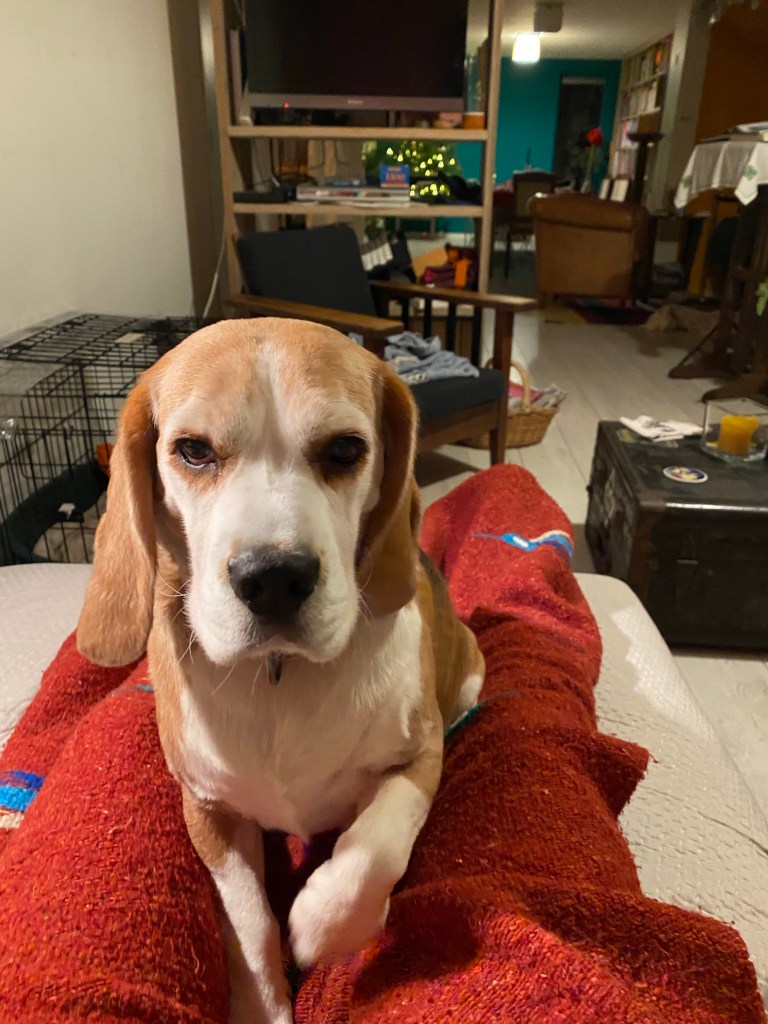
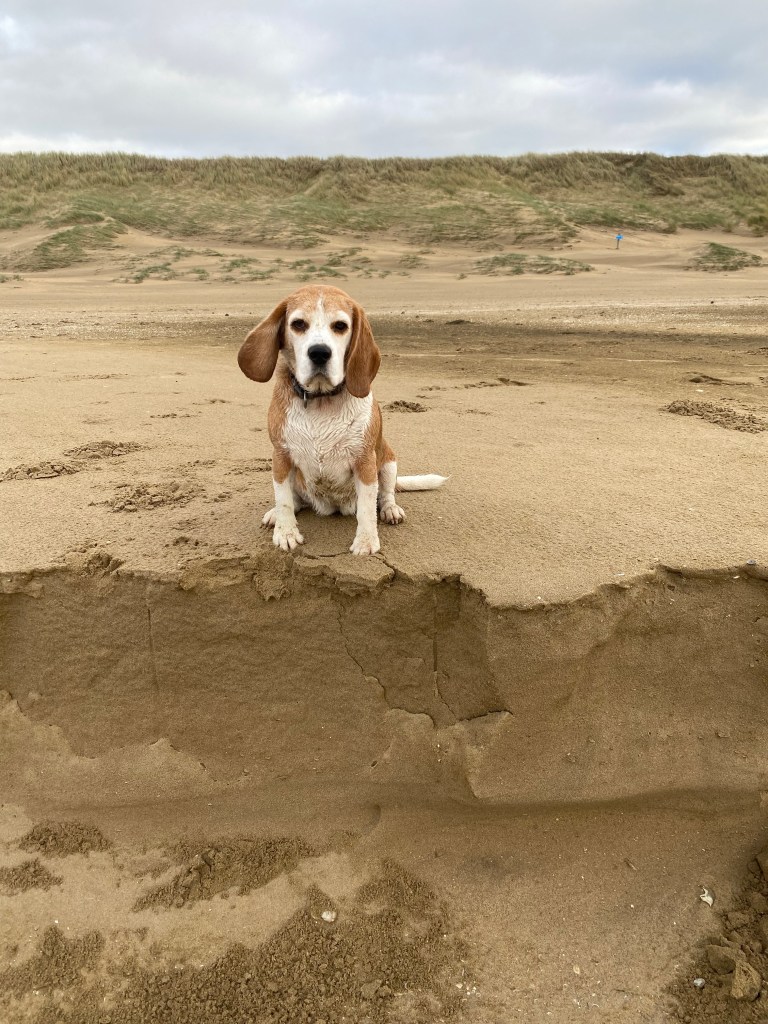
Time does seem to be speeding by. What will I do in 2024 to slow down the passage of time? There is only one answer: to be more present in the here and now. There are teachers everywhere who can help with being mindfully present, starting with this four-legged guru.


















 kristininholland